We tend not to understand how what is now viewed as mundane was once revolutionary. The simple act of balancing our checkbook is a legacy of a revolutionary and transformational process which was first propagated not much more than 500 years ago. That process is double entry bookkeeping (DEBK). There is some contention as to where DEBK was first used or at least widely used, but there is little contention that is the big picture, it is a relatively newly adopted human practice. Humans have been accumulating and trading for thousands of years. We have been formally accounting using DEBK for only a few hundred years.
What is the big deal about DEBK? It allowed individuals and more importantly larger organizations to organize large amounts of information into relatively compact journals with visual displays which allowed people to accurately assess whether their activities where leaving themselves and their organizations better off after transactions. DEBK is one of the foundations of the modern trading economy and served as a foundation for the growth of wealth and the unprecedented improvement of the human condition which has happened in the past few hundred years.
Let's move from commerce to healthcare. In the healthcare economy, at the most fundamental level the ultimate goal is to leave patients with more health assets after encounters than they started with. While appearing very simple when boiled down to this principle, setting up the ledgers is not so straight forward. What exactly do the entries look like? What are health assets and what units can they be measured in? What specifically do people value in terms of health?
There is the absence of undesirable symptoms whether pain, anxiety, or fatigue. There is also the presence of particular functionality. Can you walk, run, climb stairs, think clearly, solve problems, or function sufficiently to work and earn a living. This sounds complicated to measure but there are already various patient reported outcomes tools which measure many of these elements.
There are also financial tools which can be used. For any given intervention, financial assets are needed to deploy. There is always a financial and time costs to devoting resources to address health issues. If we are able to measure health assets over time, theoretically we can begin to assess whether a financial commitment to a person results in a good investment.
The barriers to deploying such a project are not insurmountable. One issue we will need to anticipate is how we will execute the conversion of financial resources into health assets. There will be huge variation in terms of the preferences of specific individuals. Some people will want to invest large amounts of money to improve their health asset picture while others will want to invest those resources elsewhere.
Furthermore, improvement of health assets may be best done via investment directed toward activities and services not commonly viewed as health care services. There are currently biases skewed to certain directions of investment driven by health insurance which probably drive inefficient allocation of resources that leave people and populations worse off than if the resources were invested via some alternative approach. However, without the equivalent of DEBK for health assets, the pernicious effects and the asset losses created by these suboptimal investments are hidden and opaque.
For those who repeat the mantra that health care is different, DEBK application into the world of health assets will be a wake up call. Improvement of the human condition requires human activity driven by incentives and systems that allow us to measure whether investments of time, effort, and money actually provide on return on that investment. Do we leave people better than we found them and are the investments we make best applied to where they can best accomplish this goal?
Definitely not a follower: Following the herd will get you to where the herd is going
Sunday, June 4, 2017
Tuesday, May 9, 2017
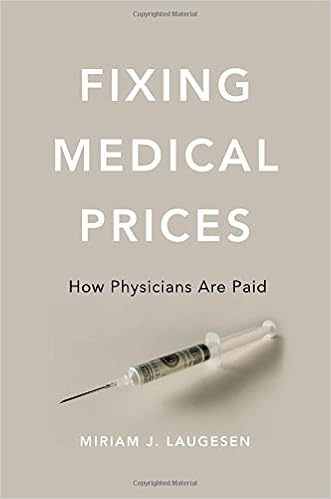
Fixing Medical Prices - The history of RBRVS and the RUC
For those who are interested in the mess that is health care financing, this is a must read. It contains the story of how the RBRVS was adopted and how the whole process was co-opted by the AMA and the RUC. While the influence of the House of Medicine may be perceived to be waning in some domains, a small group of people through the RUC has shaped (warped) and continues to shape (warp) the practice of medicine at the most fundamental level. Monday, May 8, 2017
Case discussions, tumor boards, and phantom consensus
I received referral paperwork (not really paper anymore..) on a patient this week. In the packet of information was a letter which described that the clinical details regarding this particular patient had been presented at a local medical meeting and a particular consensus regarding diagnosis was reached. The "group" thought the Dx was X. Hmmm...How interesting. Just what did this mean?
Was there an actual vote taken regarding the diagnosis and if so, what exactly was the tally? Did this tally reflect an overwhelming majority, a simply majority or perhaps just some form of plurality (45%?, 25%? or other?). I have been to enough of these meetings to know for certain, no vote was taken. The consensus recognized was owned by everyone but really no one.
This phenomena is widespread within medicine. We value clinical discussions and there are a number of traditional venues where difficult cases are presented to various groups of experts and conclusions are drawn. It is a good idea but there are limits to its utility, especially when the desire for input morphs into groupthink where no one ultimately owns the decisions made. Is this process compatible with medicine in the 21st century?
Was there an actual vote taken regarding the diagnosis and if so, what exactly was the tally? Did this tally reflect an overwhelming majority, a simply majority or perhaps just some form of plurality (45%?, 25%? or other?). I have been to enough of these meetings to know for certain, no vote was taken. The consensus recognized was owned by everyone but really no one.
This phenomena is widespread within medicine. We value clinical discussions and there are a number of traditional venues where difficult cases are presented to various groups of experts and conclusions are drawn. It is a good idea but there are limits to its utility, especially when the desire for input morphs into groupthink where no one ultimately owns the decisions made. Is this process compatible with medicine in the 21st century?
Sunday, May 7, 2017
Health care reform: What problem(s) are we trying to fix?
I feel I am being taken back to when I started blogging, at the beginning of the Obama Administration and at the time of the debates regarding the ACA. Only this time it is role reversal. The Republicans control both houses of Congress and the White House and similarly, they have insufficient numbers to avoid filibuster issues in the Senate. I started writing this piece before the first House health care bill was withdrawn but I was not able to get back to it until after the second bill made it to the Senate. I have not had a chance to read either one in any great detail. I suspect I am no different from the overwhelming majority of people who feel entirely comfortable to render judgment, either positive or negative.
I understand the urgency which is perceived by Republican leadership, but the urgency is political urgency, not necessarily anything more. Yes, the exchanges are collapsing but from what I can tell, nothing offered in either of the replacement bills will do much to forestall this near term problem.
As far as I can determine, the debate is essentially useless. One side claims it is acting to avoid immediate ACA collapse while the other side claims it is resisting to avoid system collapse which will be induced by reform. The issues are framed as black or white. None of this makes any sense.
We have a dysfunctional system and it has been increasingly dysfunctional for decades. We spend tons of money for low value care. Services which could and should be inexpensive are expensive. We still have substantial numbers of people who are not insured, despite the ACA. Even those with insurance have a hard time accessing services they need. The quality of the services offered is spotty and highly variable. We are going broke trying to keep up with spending.
It is important to address these issues over time. It is also important to prioritize them because not everything can or should be addressed at the same time. Some of the goals are mutually incompatible, at least currently and likely inherently into the indefinite future.
In my mind there are basically two competing immediate priorities. The quality and value issue is tied to both.
1. No one should be left without adequate resources to meet the needs of their illnesses, no matter what. Included in this is the debate regarding pre-existing conditions and insurance coverage.
2. Health care costs are increasing in an unsustainable fashion and will consume resources which may better invested outside of the health care economy.
The first tends to be talking points from the left and the second is a talking point from the right. They are two very different priority sets. Both sides want value and quality (who can argue wit that?) Making the first priorities are not compatible with making financial sustainability one's priority. It will take infinite resources to entice the last few millions to partake in the insurance market. Furthermore, even in the presence of near universal insurance there will always be circumstances where coverage will not equate to actual care. A good system which provides insurance coverage does not mean a perfect system. One will always be able to find examples of failure, even in a the best system one can deploy at any given point in time.
The current debate is very disheartening because the competing parties frame the discussion in terms of starkly right and wrong alternatives. If they actually believe this starkness is true we are in trouble. I am not sure what to hope for; parties are blind to where they might be wrong, or parties who are simply power hungry and willing to vilify those with contrary views simply to further their own personal ends.
The current system is a mess, for a host of reasons. Culpability goes back generations to decisions made in both political and private sectors. Unwinding this, if it is even possible, will be painful. It is only possible if the biggest contributors to dysfunction can be identified and addressed in a stepwise fashion. However, we cannot even come to an agreement as to what primary dysfunction we need to address. Is it the fact that there are those still out there who cannot garner sufficient benefit from the insurance/healthcare delivery system or is it that the system is financially unsustainable? Focus on the first priority and you worsen the second problem; and vice versa.
Meanwhile, the rhetoric gets more strident and the assumption is that no compromises and trade offs are required. Lobby for what you believe represents prudent fiscal constraint which is required to save future generations from bankruptcy and you get accused of being heartless and an idiot.
However, for any system to work better, there will be financial transfers required. How much is optimal is likely a moving target. They need to be based upon consistent principles, framed is a transparent way, and supported by the best outcomes data we can muster. The only real outcomes data we use is whether politicians can leverage transfers ( or resistance to transfers) into votes. Currently, financial transfers such as those which are required for the ACA, feed the polarization since they come to be either expected by some segments of society or resented by other segments, independently of whether they are good investments.
The bottom line is I don't get how anyone can be especially passionate about our options. Fixing problems which have plagued mankind for millennia does not happen by trying to implement broad political and legal fixes to problems we do not understand and are not able to readily measure success or failure. One set of constituencies measures success by how we spend while the other measures success by how little we spend.
What I am certain of is within the spectrum of solutions offered to fix health care there are ones that may be better or worse, but none that represent right or wrong. Even the better or worse assessments need to be understood within specific time contexts. Some that may be better in the short term could be worse in the longer term, and vice versa. The choices are simply not that starkly right or wrong and to vilify someone who points that out is crazy.
I understand the urgency which is perceived by Republican leadership, but the urgency is political urgency, not necessarily anything more. Yes, the exchanges are collapsing but from what I can tell, nothing offered in either of the replacement bills will do much to forestall this near term problem.
As far as I can determine, the debate is essentially useless. One side claims it is acting to avoid immediate ACA collapse while the other side claims it is resisting to avoid system collapse which will be induced by reform. The issues are framed as black or white. None of this makes any sense.
We have a dysfunctional system and it has been increasingly dysfunctional for decades. We spend tons of money for low value care. Services which could and should be inexpensive are expensive. We still have substantial numbers of people who are not insured, despite the ACA. Even those with insurance have a hard time accessing services they need. The quality of the services offered is spotty and highly variable. We are going broke trying to keep up with spending.
It is important to address these issues over time. It is also important to prioritize them because not everything can or should be addressed at the same time. Some of the goals are mutually incompatible, at least currently and likely inherently into the indefinite future.
In my mind there are basically two competing immediate priorities. The quality and value issue is tied to both.
1. No one should be left without adequate resources to meet the needs of their illnesses, no matter what. Included in this is the debate regarding pre-existing conditions and insurance coverage.
2. Health care costs are increasing in an unsustainable fashion and will consume resources which may better invested outside of the health care economy.
The first tends to be talking points from the left and the second is a talking point from the right. They are two very different priority sets. Both sides want value and quality (who can argue wit that?) Making the first priorities are not compatible with making financial sustainability one's priority. It will take infinite resources to entice the last few millions to partake in the insurance market. Furthermore, even in the presence of near universal insurance there will always be circumstances where coverage will not equate to actual care. A good system which provides insurance coverage does not mean a perfect system. One will always be able to find examples of failure, even in a the best system one can deploy at any given point in time.
The current debate is very disheartening because the competing parties frame the discussion in terms of starkly right and wrong alternatives. If they actually believe this starkness is true we are in trouble. I am not sure what to hope for; parties are blind to where they might be wrong, or parties who are simply power hungry and willing to vilify those with contrary views simply to further their own personal ends.
The current system is a mess, for a host of reasons. Culpability goes back generations to decisions made in both political and private sectors. Unwinding this, if it is even possible, will be painful. It is only possible if the biggest contributors to dysfunction can be identified and addressed in a stepwise fashion. However, we cannot even come to an agreement as to what primary dysfunction we need to address. Is it the fact that there are those still out there who cannot garner sufficient benefit from the insurance/healthcare delivery system or is it that the system is financially unsustainable? Focus on the first priority and you worsen the second problem; and vice versa.
Meanwhile, the rhetoric gets more strident and the assumption is that no compromises and trade offs are required. Lobby for what you believe represents prudent fiscal constraint which is required to save future generations from bankruptcy and you get accused of being heartless and an idiot.
However, for any system to work better, there will be financial transfers required. How much is optimal is likely a moving target. They need to be based upon consistent principles, framed is a transparent way, and supported by the best outcomes data we can muster. The only real outcomes data we use is whether politicians can leverage transfers ( or resistance to transfers) into votes. Currently, financial transfers such as those which are required for the ACA, feed the polarization since they come to be either expected by some segments of society or resented by other segments, independently of whether they are good investments.
The bottom line is I don't get how anyone can be especially passionate about our options. Fixing problems which have plagued mankind for millennia does not happen by trying to implement broad political and legal fixes to problems we do not understand and are not able to readily measure success or failure. One set of constituencies measures success by how we spend while the other measures success by how little we spend.
What I am certain of is within the spectrum of solutions offered to fix health care there are ones that may be better or worse, but none that represent right or wrong. Even the better or worse assessments need to be understood within specific time contexts. Some that may be better in the short term could be worse in the longer term, and vice versa. The choices are simply not that starkly right or wrong and to vilify someone who points that out is crazy.
Sunday, April 23, 2017
Sunday, April 9, 2017
The tyrannies of experts and the legacy of Woodrow Wilson
I am still in stunned. I, in no way anticipated a Trump victory in the Presidential race. He seemed like a clown to me, and a mean spirited one to boot. However, since I believed there was no way that he was going to be elected, I did not devote much time or attention to what he actually would pursue if he was elected. Press coverage did not especially help, in that it tended to cover polarizing and titillating elements such as Muslim bans and pussy grabbing.
Fast forward a few months and we have a Trump administration and despite wishful thinking of the Democratic Party, we likely have at least four years of this. The mid terms elections may sway the balance of power in Congress, but the executive branch is with us for the next four years. What does this mean? I am pretty sure I don't know but I suspect no one else really knows. I have been relatively quiet about Trump and his administration. I am inherently skeptical about everything political and for that reason I am skeptical of Trump while also skeptical of the anti-Trump movement, which appear to be monolithic in their opposition to him.
Beyond the outrageous and the titillation, what are these guys all about? What are they trying to accomplish? Should I oppose everything they stand for? Recent coverage of the CPAC conference highlighted some brief video of Steve Bannon (Bannon) and he highlighted three major priorities; National Security, Economic Nationalism, and Deconstruction of the Administrative State. I will delve into national security at some later date, when I can say something intelligent, but must state emphatically that the mean-spirited xenophobia framed as a security concern is indefensible. Furthermore, I think Bannon and Trump are barking up the wrong tree in regards to economic nationalism, but I am out of sync with both political parties on this.
The issues raised on the Administrative State piqued by interest. I had not heard this term before but after I delved into this I realized I had given this much thought and in order to understand these issues, one must go back to the history of the Progressive movement and the works and impact of Woodrow Wilson in order to understand where this came from and how fundamentally this movement changed both how our government runs, and changed the role of experts in the private quasi-regulatory realm. Here lies much of the source of current political polarization. Do you place your faith in the state and administrative agencies (bigger government) or do you place more faith in markets and constitutional limitations which may limit the power of the state to do both good and mischief? Tough question but it is the question that must be addressed.
Please refer to the two videos below - one from Richard Epstein (Epstein) and one from the National Constitution Center (NCC).
Fast forward a few months and we have a Trump administration and despite wishful thinking of the Democratic Party, we likely have at least four years of this. The mid terms elections may sway the balance of power in Congress, but the executive branch is with us for the next four years. What does this mean? I am pretty sure I don't know but I suspect no one else really knows. I have been relatively quiet about Trump and his administration. I am inherently skeptical about everything political and for that reason I am skeptical of Trump while also skeptical of the anti-Trump movement, which appear to be monolithic in their opposition to him.
Beyond the outrageous and the titillation, what are these guys all about? What are they trying to accomplish? Should I oppose everything they stand for? Recent coverage of the CPAC conference highlighted some brief video of Steve Bannon (Bannon) and he highlighted three major priorities; National Security, Economic Nationalism, and Deconstruction of the Administrative State. I will delve into national security at some later date, when I can say something intelligent, but must state emphatically that the mean-spirited xenophobia framed as a security concern is indefensible. Furthermore, I think Bannon and Trump are barking up the wrong tree in regards to economic nationalism, but I am out of sync with both political parties on this.
The issues raised on the Administrative State piqued by interest. I had not heard this term before but after I delved into this I realized I had given this much thought and in order to understand these issues, one must go back to the history of the Progressive movement and the works and impact of Woodrow Wilson in order to understand where this came from and how fundamentally this movement changed both how our government runs, and changed the role of experts in the private quasi-regulatory realm. Here lies much of the source of current political polarization. Do you place your faith in the state and administrative agencies (bigger government) or do you place more faith in markets and constitutional limitations which may limit the power of the state to do both good and mischief? Tough question but it is the question that must be addressed.
Please refer to the two videos below - one from Richard Epstein (Epstein) and one from the National Constitution Center (NCC).
Why markets do not work in health care
The reason that markets do not appear to work in healthcare is that there really few if any true markets deployed in healthcare. The question is, what are true markets and why do they tend to allocate resources so efficiently.
The realization I recently had focuses on a concept first put forth by Amos Tversky and Daniel Kahneman called loss aversion. Basically loss aversion means that people prefer avoiding losses as opposed to making gains. Any true market transaction must deal with loss aversion because market exchanges mean giving something up first in order to gain something. There is a complementary element to this called the endowment effect which means people place a higher value on what they already own.
What does this have to do with markets and specifically health care markets? For a transaction to happen in a free market, those undertaking the exchanges must view that they will be better off after the exchange occurs. That is a very high bar given these realities of loss aversion and endowment effect. Both parties need to hold a similar perception that they will both be better off after the exchange. Each will have to give up something they own and in market systems, what they give up is very clear to the parties undergoing the exchange. The initiation energy for the transaction has to overcome the loss aversion barrier, meaning that both parties need to be confident they are much better off after the exchange.
Health care markets are flawed markets at best. The major financial transactions happen on the front end before any services are even contemplated. They are in the form of deductions from salary, taxes, or premiums paid. These transactions do not pay for any specific health care service and they pay for some set of services which are poorly defined. Many if not people never see the money in the first place and really have no idea of what they have purchased.
This was constructed this way intentionally because if people were required to pay for premiums on a monthly basis they would experience loss aversion and push back on payment. Even with nominal charges for copays and deductibles, loss aversion prompts people to stint on their own care for the simple reason that they may perceive little value in what this money goes toward. The copays and deductibles are small fractions of the overall dollars washing around the system.
This is not unique to healthcare. Any long term investment generally has less than perfect buy in from the general public. People do not save for their retirements and Social Security is a form of forced savings. OK, it is not really savings and it is actuarially unsound, but the reason it was put in place is that because of the propensity of humans to not save for the future.
The use of insurance to pay for health care is another form of forced savings to pay for what most people will not or can not plan for. We could try to deploy more market based approaches to pay for health care but they are likely to fail miserably, or at least be viewed as failures, but not for the reasons you might think. They will fail because if people given adequate resources and are placed in charge of how they are spent, they will not view that investment in health care brings them sufficient value to invest the resources they control. We do not trust markets in health care because we do not trust people to make the decisions that we view are best.
Let's say that instead of providing subsidies for health insurance we simply provided subsidies that people could spend as they please. We are probably right that large numbers would not spend their new found gains on health care if they were given a choice. Are those who fail to make decisions that we feel best for them short sighted of are we simply arrogant to assume that we know best?
The realization I recently had focuses on a concept first put forth by Amos Tversky and Daniel Kahneman called loss aversion. Basically loss aversion means that people prefer avoiding losses as opposed to making gains. Any true market transaction must deal with loss aversion because market exchanges mean giving something up first in order to gain something. There is a complementary element to this called the endowment effect which means people place a higher value on what they already own.
What does this have to do with markets and specifically health care markets? For a transaction to happen in a free market, those undertaking the exchanges must view that they will be better off after the exchange occurs. That is a very high bar given these realities of loss aversion and endowment effect. Both parties need to hold a similar perception that they will both be better off after the exchange. Each will have to give up something they own and in market systems, what they give up is very clear to the parties undergoing the exchange. The initiation energy for the transaction has to overcome the loss aversion barrier, meaning that both parties need to be confident they are much better off after the exchange.
Health care markets are flawed markets at best. The major financial transactions happen on the front end before any services are even contemplated. They are in the form of deductions from salary, taxes, or premiums paid. These transactions do not pay for any specific health care service and they pay for some set of services which are poorly defined. Many if not people never see the money in the first place and really have no idea of what they have purchased.
This was constructed this way intentionally because if people were required to pay for premiums on a monthly basis they would experience loss aversion and push back on payment. Even with nominal charges for copays and deductibles, loss aversion prompts people to stint on their own care for the simple reason that they may perceive little value in what this money goes toward. The copays and deductibles are small fractions of the overall dollars washing around the system.
This is not unique to healthcare. Any long term investment generally has less than perfect buy in from the general public. People do not save for their retirements and Social Security is a form of forced savings. OK, it is not really savings and it is actuarially unsound, but the reason it was put in place is that because of the propensity of humans to not save for the future.
The use of insurance to pay for health care is another form of forced savings to pay for what most people will not or can not plan for. We could try to deploy more market based approaches to pay for health care but they are likely to fail miserably, or at least be viewed as failures, but not for the reasons you might think. They will fail because if people given adequate resources and are placed in charge of how they are spent, they will not view that investment in health care brings them sufficient value to invest the resources they control. We do not trust markets in health care because we do not trust people to make the decisions that we view are best.
Let's say that instead of providing subsidies for health insurance we simply provided subsidies that people could spend as they please. We are probably right that large numbers would not spend their new found gains on health care if they were given a choice. Are those who fail to make decisions that we feel best for them short sighted of are we simply arrogant to assume that we know best?
Subscribe to:
Posts (Atom)