
Health care delivery is complicated and expensive; increasingly even more expensive. Perhaps the biggest impact of anything change we are now seeing in the health care industry is being driven by cost and the movement of cost on to those who are directly receiving the services. Predictably, the effect of this cost transfer, primarily through increasing deductibles, is that those paying these bills are ever more acutely aware of the value proposition. Nothing will be more disruptive to volume driven health care delivery than patients pulling the emergency cord during the office visit and asking, "Do I really need this?"
What made health care delivery behave differently for many years was that these questions rarely arose because it was simply easier for all parties to avoid them. Doctors got paid more when they did more and as long as egregious harm was avoided and the perception of value delivered to patients was held, most everyone was happy. It was pretty easy to meet the bar on the latter since those needing to perceive value set the bar pretty low since they bore little of the actual financial cost.
We are now regularly seeing sticker shock. It is hard for those delivering health care to reconcile since from our perspective little has changed. Why should the perception be now that we are not delivering sufficient value to justify what we are charging since little has changed from our end. If what we are doing now does not hold up in terms of the value equation, how does that reflect on what we have been doing in the past?
This is really not so different from what has happened in a host of other industries. New goods and services in health care and other industries follow similar patterns. Expensive and new goods and services are developed and reach a small sliver of the market, generally the high end of the market. In the rest of the commercial world there are huge incentives to be the first to figure out how to take such new things and learn to deploy them widely but in order to do this, entrepreneurs must figure out how to do this at vastly lower cost. Unless they can succeed in doing this, they will fail since there are not sufficient financial resources for everyone to afford high end goods and services.
In health care, the insurance model until very recently provided little incentive to figure out how to deliver at lower cost. This is a disaster waiting to happen and not sustainable. It is quickly coming to a halt since many of the costs associated with services in health care are coming down full bore on to people with modest resources. In the short term this will take a terrible toll but in the longer term it is absolutely essential to inject the value imperative into health care delivery. The longer we insulate the broader public from the inflated prices and suboptimal resource allocation in health care, the longer it will go on and the worse the wake up call will ultimately be.
The health care industry must deliver value to the public. Otherwise, it will squander resources, serve as a barrier to the wealth creation which allows it to thrive, and impoverish those who are the most vulnerable.
Saturday, March 15, 2014


Sunday, March 2, 2014
The burden of competing missions
I work at an academic medical center (AMC) and involved the classic tripartite missions of clinical service, education, and research. As noted in my recent blogs, I have become increasingly aware of the divergence between what our missions might be in an academic health center and the goals of our patients and their families. Specifically, our patient's priorities revolve around cost and convenience. It appears that these goals are at odds, particularly with our educational goals.
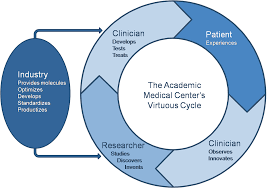
Our educational model is a legacy model which is not compatible with the increasingly rules based and focused factory based approaches begin adopted to increase efficiency and decrease cost. Furthermore, training requires exposure to a broad range of illness and therapeutics, which is not compatible with efficiency. In particular, health systems modeling of successful finances require they attract and cater to the least sick populations, in order to keep them happy and paying their premiums. While being of great financial values, these patients are of limited educational value.
Historically, GME and IME funds have attempted to close this funding gap, allowing for academic centers to have the resources to train and care for the sickest patient populations. The system worked reasonably well for a while. However like any subsidy, the money did not go where it might have more impact. It was all hospital based and tended to underwrite hospital functions. As the health care world moves more and more outside of the inpatient environment, how can training functions continue to exist, what should they look like, and who will pay for them?
 Nothing lasts forever and there is no reason to believe that a program conceived about 50 years ago will continue in perpetuity. The question is not whether it will last forever but instead what will replace it and when, and what will the transition look like? It is unfortunate that no entity in the current system seems to want to address this issue. Existing oversight organizations such as the ACCME, LCME, and the ACGME seem to be most interested in extending their reach and operate on the assumption that the current funding structure can accommodate increasing regulatory burdens forever. They will have a scary wake up call when they discover that disruption of the current Federalized funding system will represent and existential threat to them as well as the programs they oversee.
Within academic health systems, there appear to be three distinct books of business. First, there are service lines centered around cutting edge technologies and approaches which do not exist as of yet in the community and serve as a robust training resource and source of revenue for these centers. While these used to be a major characteristic of academic health centers, these are remarkably rare. Technology which can be leveraged to generate income now diffuses into the community practices at light speed.
Second, there are services which generate healthy financial margins where AMC's must compete with the community practices. However, AMC's have difficulty competing because their structure and culture may not allow them to readily address patient desires for convenience and cost. Historically, many successful AMC's have been able to extract premium payments from commercial insurers which help offset their disadvantages. Increases in co-pays associated with commercial insurance and price transparency are undermining this revenue stream very rapidly.
Finally, academic health systems provide expertise and care for patients with very complicated disease where the relevant expertise simply does not exist in community practices. These patient populations are also necessary for fulfilling training missions and maintenance of a concentration of specialized competencies within AMC's. These concentrations serve a repositories of expertise and fulfill essential functions. They are why the sickest patients end up at AMC's for their care. Unfortunately, there is no present mechanism for AMC's to monetize these capabilities which serve both essential educational functions and meet otherwise unmet clinical needs in their communities. Those functions, no matter how essential, will disappear over time if they do not provide economic value to those delivering them.
What happens when the traditional subsidies which have underwritten training are eroded while at the same time cost pressures are increased on AMC's? Stein's Law is "If something cannot go on forever, it will stop". One f the worst aspects of our current system is that the way it is structured creates all sorts of barriers to testing new approaches to training. Regulations controlling Medicare based funding are notorious for forcing those participating into an all in or out structure. The various oversight entities such as the ACGME follow a similar model where innovative funding approaches are viewed with great prejudice. All seem to be blind to the reality that we have created increasingly complex cost structures while simultaneously creating increasingly constrained and de-differentiated funding streams. This is a very dysfunctional business model.
 The end results are predictable even if the timetable of events is not. When the current funding mechanisms are disrupted, many training programs will quickly disappear. They live hand to mouth now. What will come up to replace them is an open question and will depend a great deal on what barriers will be created by current regulatory elements. What unmet needs will be created may become apparent only after a long time. Smart people will figure out how to meet human needs and profit from this, as long as they are not too constrained.
Our educational model is a legacy model which is not compatible with the increasingly rules based and focused factory based approaches begin adopted to increase efficiency and decrease cost. Furthermore, training requires exposure to a broad range of illness and therapeutics, which is not compatible with efficiency. In particular, health systems modeling of successful finances require they attract and cater to the least sick populations, in order to keep them happy and paying their premiums. While being of great financial values, these patients are of limited educational value.
Historically, GME and IME funds have attempted to close this funding gap, allowing for academic centers to have the resources to train and care for the sickest patient populations. The system worked reasonably well for a while. However like any subsidy, the money did not go where it might have more impact. It was all hospital based and tended to underwrite hospital functions. As the health care world moves more and more outside of the inpatient environment, how can training functions continue to exist, what should they look like, and who will pay for them?
Within academic health systems, there appear to be three distinct books of business. First, there are service lines centered around cutting edge technologies and approaches which do not exist as of yet in the community and serve as a robust training resource and source of revenue for these centers. While these used to be a major characteristic of academic health centers, these are remarkably rare. Technology which can be leveraged to generate income now diffuses into the community practices at light speed.
Second, there are services which generate healthy financial margins where AMC's must compete with the community practices. However, AMC's have difficulty competing because their structure and culture may not allow them to readily address patient desires for convenience and cost. Historically, many successful AMC's have been able to extract premium payments from commercial insurers which help offset their disadvantages. Increases in co-pays associated with commercial insurance and price transparency are undermining this revenue stream very rapidly.
Finally, academic health systems provide expertise and care for patients with very complicated disease where the relevant expertise simply does not exist in community practices. These patient populations are also necessary for fulfilling training missions and maintenance of a concentration of specialized competencies within AMC's. These concentrations serve a repositories of expertise and fulfill essential functions. They are why the sickest patients end up at AMC's for their care. Unfortunately, there is no present mechanism for AMC's to monetize these capabilities which serve both essential educational functions and meet otherwise unmet clinical needs in their communities. Those functions, no matter how essential, will disappear over time if they do not provide economic value to those delivering them.
What happens when the traditional subsidies which have underwritten training are eroded while at the same time cost pressures are increased on AMC's? Stein's Law is "If something cannot go on forever, it will stop". One f the worst aspects of our current system is that the way it is structured creates all sorts of barriers to testing new approaches to training. Regulations controlling Medicare based funding are notorious for forcing those participating into an all in or out structure. The various oversight entities such as the ACGME follow a similar model where innovative funding approaches are viewed with great prejudice. All seem to be blind to the reality that we have created increasingly complex cost structures while simultaneously creating increasingly constrained and de-differentiated funding streams. This is a very dysfunctional business model.
Saturday, March 1, 2014
Why should we aspire to efficiency?
I came across the 3M's health information systems blog and a piece titled "Healthcare's Efficiency Challenge"(Link). The author reviewed a book by William Baumol called The Cost Disease which tries to understand why we have not been able to garner much in terms of efficiency gains in the health care industry. The author posed the question:
 I would suggest until very recently that there has been little incentive or desire to improve efficiency. The payment system has rewarded quite the opposite of value and participants have taken them where the incentives have directed them. Do more, use more complex and expensive approaches, and any marginal level of improvement garnered, even at huge cost, was justified and compensated. The results are predictable and will become increasingly difficult to defend.
Two hundred years ago, 95%+ of the population was engaged in agriculture. We required the overwhelming part of the population to participate in this workforce in order to feed ourselves. It represented a fundamental change in human social organization which in fact dated back perhaps 10,000 years. A transition occurred, particularly accelerated in the 20th century where a way of life on the farm was destroyed. The net effect was we now have a remarkable abundance of food at markedly reduced prices. What this transition desirable or would it have been better to
 have preserved a way of life, even if had meant food would not have become more abundant?
This sort of transition is not unique. Automation of manufacturing has made countless products better and cheaper and in each case has met with tremendous resistance from specific groups who power or status have been disrupted. The Luddites sought to burn the looms that revolutionized cloth making. Various guilds fought the industrialization of craft trade. In each case they desired to maintain a certain way of life and this may be romanticized. However, the preservation of the way of life for a selected group needs to be understood within a larger context of the even more substantial improvements which would be garnered by an even larger populations. Call it progress if you will and some might want to disparage. However, the lot of people remarkably better. Who wants to go back to infant mortality and average life span of 40 years of age.
In many respects, medicine is facing just this issue. The historical model for care delivery is archaic and simply not scale able. Wecould be aspiring to deliver care to more for much, much less money, but that is not our priority quite yet. Will it ever be a priority for organized medicine? Would the AMA come out with the statement that we don't need so many expensive physicians. I doubt this. It is simply too disruptive and not realistic to expect that the disruption will be driven from within the industry. It never is.
How do we make the healthcare system more efficient, to improve the output while lowering the costs?
Two hundred years ago, 95%+ of the population was engaged in agriculture. We required the overwhelming part of the population to participate in this workforce in order to feed ourselves. It represented a fundamental change in human social organization which in fact dated back perhaps 10,000 years. A transition occurred, particularly accelerated in the 20th century where a way of life on the farm was destroyed. The net effect was we now have a remarkable abundance of food at markedly reduced prices. What this transition desirable or would it have been better to
This sort of transition is not unique. Automation of manufacturing has made countless products better and cheaper and in each case has met with tremendous resistance from specific groups who power or status have been disrupted. The Luddites sought to burn the looms that revolutionized cloth making. Various guilds fought the industrialization of craft trade. In each case they desired to maintain a certain way of life and this may be romanticized. However, the preservation of the way of life for a selected group needs to be understood within a larger context of the even more substantial improvements which would be garnered by an even larger populations. Call it progress if you will and some might want to disparage. However, the lot of people remarkably better. Who wants to go back to infant mortality and average life span of 40 years of age.
In many respects, medicine is facing just this issue. The historical model for care delivery is archaic and simply not scale able. Wecould be aspiring to deliver care to more for much, much less money, but that is not our priority quite yet. Will it ever be a priority for organized medicine? Would the AMA come out with the statement that we don't need so many expensive physicians. I doubt this. It is simply too disruptive and not realistic to expect that the disruption will be driven from within the industry. It never is.
Thursday, February 27, 2014
Selling a product the public does not want
 The American Academy of Pediatrics has come out with a position statement directing families away from the use of retail clinics ( "AAP statement). The policy statement was reported on widely in the lay press but the full report is published online in the Journal Pediatrics (which is behind a pay wall). In the official report, the authors highlight the points raised in the 2006 report where the AAP originally published a report in opposition to the use of retail clinics. They highlighted the following points to justify their opposition:
- Fragmentation of care
- Possible decreased quality of care
- Provision of episodic care to children who have special needs and chronic diseases, who may not be readily identified
- Lack of access to and maintenance of a complete, accessible, central health record that contains all pertinent patient information
- Use of tests for the purpose of diagnosis without proper follow-up
- Possible public health issues that could occur when patients who have infectious diseases are in a commercial, retail environment with little or no isolation (eg, fevers, rashes, mumps, measles,strep throat)
- Seeing children who have “minor conditions,” as will often be the case in an RBC, is misleading and problematic. Many pediatricians use the opportunity of seeing the child for something minor to address other issues in the family, discuss any problems with obesity or mental health, catch up on immunizations, identify undetected illness, and continue strengthening the relationship with the child and family. Visits for acute illnesses are important and provide an opportunity to work with patients and families to deal with a variety of other issues.
Furthermore, additional criticism was leveled based upon the observation that retail clinics as presently deployed are not compatible with the medical home model of care delivery where the priorities are:
1. The patient should have an ongoing relationship with a personal physician trained to provide first contact,
continuous, and comprehensive care;
2. The personal physician should lead a team of professionals who collectively take responsibility for the ongoing care of the patient;
3. The personal physician should be responsible for all aspects of the patient’s care;
4. Care should be coordinated and integrated across all elements of the complex health care system; and
5. Care should be facilitated through registries, information technology, and health information exchange.
Contrast this with the list with the reasons for retail clinic use identified in a recent WSJ article shown below:

"Retail clinics also are generally open seven days a week, don't require an appointment, accept more types of insurance than doctors do and charge 30% to 40% less for similar services, studies show. Costs vary widely by region and service offered, but getting a common ailment treated at a retail clinic, without insurance, typically runs between $50 and $75....
Studies show that people who use retail health clinics tend to be younger, healthier and more affluent than average. As many as 70% of parents who use them have a pediatrician but say they can't wait for an appointment or take time off work when the doctor's office is open, said Ateev Mehrotra, a policy analyst at RAND Corp., who has studied the clinics for years....
"Some pediatric practices say they won't see you if you go to a retail clinic," he said. "And we've heard that some patents tell retail clinics, 'Please don't tell the pediatrician that I'm here.' "
This is a typical example of the medical community having priorities which are different from the patient communities. The AAP espouses principles which their membership and leadership value. They just don't happen to be what their patients value quite as highly. The retail clinics offer what patients and their families value most; access, convenience, and value. Well over half of the reasons listed above relate to convenience. I also assume that the "Did not want to bother the pediatrician" means gong to the pediatric office is a hassle for all involved. We are well over 75% of the justifications are driven by convenience.
The pediatric community has probably been better about dealing with access and convenience than most the medical community, but they still appear to place a higher value on a host of other priorities. Like the broader medical community, there is a drive to convince patients as to what they should want and some degree of indignance when patients come to different conclusions when they weigh their options. Where the pediatricians see they bring value to patients is quite different from where patients seem to see where they obtain value.
The most recent report is not so unyielding in that it recognizes some potential role in partnering with retail clinics to provide urgent care when the pediatrician simply cannot accommodate. They still are highly protective of the role of pediatricians and how they add value to their patients:
"In addition, there has been scope of care “creep” within the RBC setting, as these clinics now provide services such as childhood immunizations and “school and sports physicals.” These offerings impinge on core preventive care services of the pediatric medical home and are mis-perceived by patients and families as an appropriate substitute for regular preventive care within the medical home."
Patients and their families want what they want and when given the opportunity, they will almost always chose convenience and cost over almost everything else. I am not sure I can fault that decision. While this might not be the case for obvious serious illness requiring unique expertise and capabilities, for the most part patients will get the service they desire when they use a retail clinic. Scare tactics suggesting that there is a clinically significant risk of missing some hidden pathology are basically never accompanied by actual numbers demonstrating the significance of such a risk. The risk to the standard medical office business model is much more likely than the risk to patient health.
Better, faster, and cheaper will always prevail. Good enough, faster, cheaper will come out on top as well.
Sunday, February 23, 2014
Do you like surprises?
Two hundred years ago there were many practices and beliefs which were mainstream and strongly held which have now been jettisoned. The one that comes to mind is slavery of African Americans. Slavery was accepted for thousands of years and is likely still accepted in many parts of the world. However, over the span of approximately 200 years, the moral climate the western world rapidly evolved from one where slavery was an acceptable practice to one where it is universally deplored. Similarly, custom backed up by law was used for centuries to restrict the freedom and actions of people based upon their sex, religion, ethnic group, or status at birth. All of this was viewed as being perfectly acceptable within the cultures where it
It can be viewed as something which is part of a broader set of events. The tendency for human cruelty, at least within public realms appears to have receded. Yes, I can still tune into broadcasts of ultimate fighting and fans still celebrate fights on the ice in hockey, but this sentiment gets less acceptance over time. Similarly, people and organizations which celebrate hate, violence, and intolerance now function primarily at the margins of our society. This trend is not something which is universal in the world. It is more the exception rather than the rule. Slavery still exists. Surprisingly, the world is purportedly less violent than at any other point in human history (Violence Ted Talk). However, it is till plenty violent. One can hope that the tendency toward less cruelty continues.
Wednesday, February 12, 2014
Medical Partisanship
I became aware of the work of Dan M. Kahan who recently published a working paper as part of the Cultural Cognition Projection. In the paper, he published the results of a clever experiment (Motivated Numeracy and Enlightened Self-Government) where he looked at conclusions drawn from simple data in 2 x 2 tables. The same exact data when linked to non-controversial scenarios (response of a rash to treatment with a cream) yielded completely different conclusions from individuals as opposed to when these data were associated with partisan questions regarding gun control. When strong beliefs entered into the equation, objective assessment of the data disappears.
Within the medical world, we have developed a host of partisan issues and we would be well served to
Much like the last time such an article was published in NYT, the letters displayed remarkable partisanship. For the true believers, particularly those in whom mammography found what was diagnosed as cancer, no contrary information will convince them that their lives were not saved. It may be that for a vanishing small group, their perception may represent the truth. The estimates are somewhere in the realm of 1-2 per thousand screened for 10 years may have their lives saved. It is worth it? It depends on how you look at the question, whether the resources spent were your own, and whether similar resources spent differently may have saved or enhanced more lives.
This does not need to be a controversy for a simple reason. Screening mammography is a relatively cheap tool. The roughly $100, which needs to be spent every two years, represents about two tanks of gasoline or a fraction of a family grocery bill for one week. If patients were required to pay for this out of pocket, would a well informed consumer, given all of the data we know, view it as a good investment of their own money? One can ultimately feel as strongly about this issue as you desire, and this can be translated into action through the allocation of your own resources. Something cannot be that important if you cannot convince a patient to allocate $100 once every two years.
There are literally millions of choices we can make relating to how we allocate our personal resources. How we make these decisions depends upon our own individual preferences and our individual resources. I think I am on safe ground to say that the case for screening mammography is not going to get any more conclusive and there is no good reason to try to force some sort of universal set of actions on the parties involved. My take on this and a host of other screening activities is many are a bad deal for me and for other patients. There are better ways for me to invest my time and money.
The mammography controversy screams out that current insurance system only makes this problem oodles worse. We need to figure out how to take whatever resources that now go to pay for these back in the hands of women who can decide if participation makes sense. If they elect to get screened, they are no worse off than they are now. If they elect not be screened, they can allocate those resources to something else they deem of greater value. Good and smart people will make a variety of decisions, not all of which all members of the medical community will agree with. Many women will continue to chose to be be screened. Many will not. It is not entirely clear what the best decision should be and we will likely never know that answer. One size does not fit all.
Sunday, February 9, 2014
Difficult choices
Physicians were heartened by the proposed budget deal to address the festering wound which is the SGR fix. Yes, good news. However, the path to gaining control of health care spending always must always involve one specific outcome... spend less. The disagreements are always regarding the how that comes about. The CBO report (http://www.cbo.gov/publication/44906) addresses these issues, some in detail, and some in broad terms. From the report:

Note that items 1,6,7,10,and 15 make up the bulk of the savings and although they do not specifically state this in the executive summary (I have not had a chance to read the entire report in detail), I also suspect these items make up the bulk of the ongoing savings beyond 2023. Recommendation #1, imposing caps on Federal Medicaid spending, is a recommendation which could not be any less timely. States have been hesitant to expand Medicaid because of their concerns about sustainability. Their concerns were focused on what would happen three years from now when the Federal payments promises would need to be renegotiated. This has been countered by the argument that the Feds are picking up the tab. The frequently wrong but never in doubt crowd suggested that no one in their right mind would turn down free money.
It seems that the concerns perhaps are warranted and perhaps they will come into play before that three year window. The CBO is suggesting this be rethought just as the Medicaid expansion is only staring! This will be a huge issue and one can figure the way Congress deals with this is to push the real savings out until a different election cycle. Any way ones looks at this and depending upon how the Medicaid caps are imposed, there is a big chunk of change involved ($600 billion). If no savings are garnered from capping Medicaid expansion, it has to come from somewhere else if the bill is to work. Look for creative accounting solutions which might be considered fraud if done in the private sector.
The additional items (6, 7, 10, 15) all address cost control as noted above by
The same goes for reducing the tax preferences for employer based health insurance (#15). It is almost universally recognized that most of subsidies go to waste. The tax preferences afforded to health care benefits have resulted primarily in increased cost over time with little or no increase in value.
No significant cost controls will come about until the consumer has skin in the game. All the big numbers in this table assembled by the CBO focus on this aspect of the problem. However, this is politically untenable. There is still the widely held belief that people can be insulated from the cost of health care and not be affected in terms of their consumption patterns. It is simply wrong. Structure insurance to provide discounted prices through subsidies and it should be no surprise that one drives consumption through the roof and simultaneously perverts the pricing mechanism. No headway can be made on this until the underlying financial drivers are addressed. Anything which purports otherwise is simply wishful thinking.
Most of the 16 options in this report would either decrease federal spending on health programs or increase revenues (or equivalently, reduce tax expenditures) as a result of changes in tax provisions related to health care. Some options would result in a reallocation of health care spending—from the federal government to businesses, households, or state governments, for example—and most would give parties other than the federal government stronger incentives to control costs while exposing them to more financial risk.Eleven of the options are similar in scope to those in CBO’s previous volumes of budget options. For each of those options, the text provides background information, describes the possible policy change or changes, presents the estimated effects on spending or revenues, and summarizes arguments for and against the changes. The other five options—Options 1, 6, 7, 10, and 15—address broad approaches to changing federal health care policy, all of which would offer lawmakers a variety of alternative ways to alter current law.
Note that items 1,6,7,10,and 15 make up the bulk of the savings and although they do not specifically state this in the executive summary (I have not had a chance to read the entire report in detail), I also suspect these items make up the bulk of the ongoing savings beyond 2023. Recommendation #1, imposing caps on Federal Medicaid spending, is a recommendation which could not be any less timely. States have been hesitant to expand Medicaid because of their concerns about sustainability. Their concerns were focused on what would happen three years from now when the Federal payments promises would need to be renegotiated. This has been countered by the argument that the Feds are picking up the tab. The frequently wrong but never in doubt crowd suggested that no one in their right mind would turn down free money.
It seems that the concerns perhaps are warranted and perhaps they will come into play before that three year window. The CBO is suggesting this be rethought just as the Medicaid expansion is only staring! This will be a huge issue and one can figure the way Congress deals with this is to push the real savings out until a different election cycle. Any way ones looks at this and depending upon how the Medicaid caps are imposed, there is a big chunk of change involved ($600 billion). If no savings are garnered from capping Medicaid expansion, it has to come from somewhere else if the bill is to work. Look for creative accounting solutions which might be considered fraud if done in the private sector.
The additional items (6, 7, 10, 15) all address cost control as noted above by
...reallocation of health care spending—from the federal government to businesses, households, or state governments, for example—and most would give parties other than the federal government stronger incentives to control costs while exposing them to more financial risk."These will all be very politically unpopular because they do exactly what needs to be done. Health care spending is out of control because we have created financial tools which induce the public to consume more health care than they would if they had to assume even close to the cost of what they are consuming. If Medicare beneficiaries got actual cash money from the Federal government to purchase insurance, they would over time become more prudent as to what they purchased. Similarly, if the Medigap coverage was throttled back, Medicare beneficiaries would become more aware of the costs of what they are consuming.
The same goes for reducing the tax preferences for employer based health insurance (#15). It is almost universally recognized that most of subsidies go to waste. The tax preferences afforded to health care benefits have resulted primarily in increased cost over time with little or no increase in value.
No significant cost controls will come about until the consumer has skin in the game. All the big numbers in this table assembled by the CBO focus on this aspect of the problem. However, this is politically untenable. There is still the widely held belief that people can be insulated from the cost of health care and not be affected in terms of their consumption patterns. It is simply wrong. Structure insurance to provide discounted prices through subsidies and it should be no surprise that one drives consumption through the roof and simultaneously perverts the pricing mechanism. No headway can be made on this until the underlying financial drivers are addressed. Anything which purports otherwise is simply wishful thinking.
Subscribe to:
Posts (Atom)