Steve Malanaga wrote an Op-Ed piece in the WSJ which took me back to my childhood. I grew up in Buffalo, New York. Oddly enough my recollections were almost Shangri La like. It was a wonderful place to grow up, particularly if you had nothing to compare it to from the perspective of climate. I thought everyone played pick up basketball outdoors at -20F wearing a parka and mittens. There was also a certain appeal of women whose natural curves were augmented by down filler.
http://online.wsj.com/article/SB10001424052970204409004577156603296740624.html?mod=WSJ_article_comments#articleTabs%3Darticle
However years have past (many) and the shine has worn off. While I grew up there, Buffalo was clearly off its peak but there were many other less affluent and less thriving communities in the US. That has changed and if it were not for places like Detroit, Buffalo could take the prize as the most fallen from economic grace.
I had not ventured back to visit for many years until 2001 when I was invited to give a seminar at the University by a colleague who had moved to Buffalo to run a training program. I thought it would it would be great to wander around my old haunts and visit the few old family friends who still remained. It turned out to be an odd trip at many levels.
The visit was planned for around September 18, 2001. It almost did not happen because of 9/11. However, I took one of the first flights after airline travel was restored. On the way to the airport, I listened to a lecture from the Teaching Company. I am a TC freak. The lecture series was on the history of the United States and the specific lecture was focused on the US at the turn of the last century..1900. It centered on what was then arguably the richest city in the country. You guessed it... Buffalo, NY. The lecturer spoke of the confluence of transportation systems, the steel mills belching smoke, and the vistas of grain elevators.
I recall flying into Buffalo after listening to this lecture and our approach to the airport actually took us over the sites of those previous thriving industrial sites. How things had changed. What I saw were the rusted hulks of those majestic enterprises and the land was well into reclaiming them. The good news is Lake was much cleaner than I recall. No longer is the small boat harbour water stained orange from the slag from the Bethlehem Steel plant. The bad news is, Buffalo has joined the ranks of a number of more pristine but very poor places on this earth. Both the pollution and the jobs left.
Which brings me back to Steve Malanga's Op-Ed piece. What takes a place like Buffalo from richest to poorest in slightly more than 100 years? Is that a rapid transition or a gradual one? Is it surprising or predictable? Are transitions like this consistently preventable or inevitable? Will we be looking back at Silicon Valley in 100 years and have witnessed the same thing? Will Buffalo undergo a revival and become a destination location?
What makes some places rich and other places not so much so? The answer is wealth as as one of my favorite authors P.J. O'Rourke has written in his hilariously funny books "Eat the Rich" we tend to have little understanding of this process. Creating wealth and the entities that create wealth is not like baking a cake. Even under the best of circumstances we can and should expect failures. In addition, we should expect radical change. Entities which support the enduring generation of wealth are entities that are prepared to reinvent themselves, even if it means their reinvented selves look little like their own selves.
Places like Buffalo die because they tried to hold on to what they were and failed to empower those who might create a new and different Buffalo. Large infusion of political dollars do what they do best; preserve their political bases. They do not create wealth because that tends to upset the political status quo. What will bring back Buffalo? I don't know and I would venture to guess that no single person knows. However the decisions in the political realm which can help can best be described as permissive. At best they can allow them to happen. In the present state the default is to prevent them.
Definitely not a follower: Following the herd will get you to where the herd is going
Monday, January 16, 2012
Sunday, January 15, 2012
You'll shoot your eye out!
A favorite ploy of health care economists who are market deniers is to channel through the spirit of Kenneth Arrow, whose sentinal work on health care economics in 1963 still shapes the debate today. In Uwe Rheinhardt's piece today in the NYTs, there is such an example:
(http://economix.blogs.nytimes.com/2010/08/13/health-care-uncertainty-and-morality/)
The emphasis is mine. Whenever market based solutions to health care economy problems arise, the response is predictable. A firm and confident declaration is made that the market does not work in health care. End of story. Debate is closed. Justification or empiric support is not required. A Nobel Laureate has spoken. It reminds me of one of my favorite movies, A Christmas Story where the main character Ralphie desires a Red Ryder bee bee gun for Christmas. When he expresses his desire, he consistently gets the same response:
So tell me why markets won't work in health care? I don't want to be shown that market solutions will not be perfect. I take that as a given. I do not want to be shown anecdotes of imperfect outcomes. Bad outcomes will happen even with even good systems and should not be used as a basis to scrap market approaches. The center piece of Arrow's argument was the existence of information asymetries which he comments on further..
Again there are times where those who are ill at inherently at an insurmountable disadvantage but not always. In the same vein automobile repairs do not always have to happen within the context of being broken down in a desolate place with a tight time table. However, if your car breaks down in the boonies where you know no one you are more likely to be fleeced by someone who can and will take advantage of you. That does not mean we should eliminate the market to deal with automotive repairs.
The fundamental tenants of my belief in markets in health care are simple. First, it is basically incontrovertible that markets are the best tools yet developed to optimally allocate scarce resources. Second, it is impossible to make any consistent distinction between what is inside and outside of the health care economy at the margins. Almost any good or service which enhances human life could arguably fall within the health care realm. Between health care cost inflation and ongoing redefinition of what entails health care, the health care economy will basically absorb the rest of the economy. If the health care economy is divorced from market allocation schemes, it means that the world of the future will be a throwback to the pre-market allocated world. Unless there is some other resource allocation mechanism which miraculously develops to replace market mechanisms in the near future, we will commit our descendants to wealth destroying race to the bottom.
It is not as if it needs to be all or nothing immediately. For each health care entity, give us the flexibility to move parts of our business to outside the third party system. As it stands now, you are either all in or all out. That is no way to structure a system that needs innovation. No one wants to make that big bet. Which portions of the health care business that can move to market and consumer driven models will be decided by many little bets. Many will lose. Some will win. A few will win big and winning big I mean the consumer will end up getting much more for much less. That is what markets do. Yes, someone may shoot their eye out. I am willing to take that chance.
(http://economix.blogs.nytimes.com/2010/08/13/health-care-uncertainty-and-morality/)
In a recent interview with Conor Clarke in The Atlantic, Professor Arrow was asked how much of his 1963 paper “is still an accurate representation of the problems the health market faces.”
He responded:
I think the basic analysis hasn’t changed. There are wars over the details, but the basic analysis is accepted. Some specifics have changed. If you look closely at my argument there is a sociological structure. There is a kind of sociological thesis. The market won’t work – it doesn’t work well in the health context. But something else supplements the market, and the thing I put stress on in the paper are the elements that put a non-economic influence on the market: professional commitments to provide a service, to engage in services that aren’t self-serving. Standards of caring decided by non-economic actors. And one problem we have now is an erosion of professional standards. In a way there is more emphasis on markets and self-aggrandizement in the context of health care, and that has led to some of the problems we have today.
Ralphie: I want an official Red Ryder, carbine action, two-hundred shot range model air rifle! Mrs. Parker: No, you'll shoot your eye out.He gets his courage up to ask a departmental store Santa and he gets the same response. Why would you want that...you'll shoot your eye out!!! No argument. No response. Ralphie's desires are trumped by a statement for which he has no response. He cannot ask whether this claim is supported by any sort of empiric evidence. He is not at liberty to ask whether the risk of eye injury is different in Red Ryder air gun users. It is the gospel truth and should not be questioned.
So tell me why markets won't work in health care? I don't want to be shown that market solutions will not be perfect. I take that as a given. I do not want to be shown anecdotes of imperfect outcomes. Bad outcomes will happen even with even good systems and should not be used as a basis to scrap market approaches. The center piece of Arrow's argument was the existence of information asymetries which he comments on further..
Such has changed since the early 1960s. In particular, the unimaginable advances in information technology have revolutionized many sectors of the economy. In health care, this electronic revolution has made it possible for patients to be much better informed about the efficacy of alternative medical treatments. That, by itself, should have reduced the problem of information asymmetry.
On the other hand, as medical science and practice advance rapidly, the information gap between physicians and their patients increases. Many transactions in the market for health care therefore still proceed on the basis of trust in the expertise and integrity of physicians and other health workers, rather than on the countervailing power of equally well-informed buyers and sellers, each looking out only for their own self-interest.Is this really any different from other segments of the economy? I do not understand how to fix the brakes on my care and I suspect that a faulty brake job more likely puts me in harms way than most interactions with my physician. I have to trust that my mechanic installed the shoes correctly. I have to trust that the mechanic who maintains the engines on the planes I fly is not cutting to may corners. I need to trust the cooks who prepare my food are not adulterating their fare. Our entire economy is based upon trust and skepticism. You need both.
Again there are times where those who are ill at inherently at an insurmountable disadvantage but not always. In the same vein automobile repairs do not always have to happen within the context of being broken down in a desolate place with a tight time table. However, if your car breaks down in the boonies where you know no one you are more likely to be fleeced by someone who can and will take advantage of you. That does not mean we should eliminate the market to deal with automotive repairs.
The fundamental tenants of my belief in markets in health care are simple. First, it is basically incontrovertible that markets are the best tools yet developed to optimally allocate scarce resources. Second, it is impossible to make any consistent distinction between what is inside and outside of the health care economy at the margins. Almost any good or service which enhances human life could arguably fall within the health care realm. Between health care cost inflation and ongoing redefinition of what entails health care, the health care economy will basically absorb the rest of the economy. If the health care economy is divorced from market allocation schemes, it means that the world of the future will be a throwback to the pre-market allocated world. Unless there is some other resource allocation mechanism which miraculously develops to replace market mechanisms in the near future, we will commit our descendants to wealth destroying race to the bottom.
It is not as if it needs to be all or nothing immediately. For each health care entity, give us the flexibility to move parts of our business to outside the third party system. As it stands now, you are either all in or all out. That is no way to structure a system that needs innovation. No one wants to make that big bet. Which portions of the health care business that can move to market and consumer driven models will be decided by many little bets. Many will lose. Some will win. A few will win big and winning big I mean the consumer will end up getting much more for much less. That is what markets do. Yes, someone may shoot their eye out. I am willing to take that chance.
Shedding light on misaligned incentives
Sometimes I read a story which appears to be unconnected to health care which sheds light on the health care payment quandary. Today is such a day, In today's WSJ Kate Linebaugh wrote a piece on the challenges facing municipalities which are trying to deploy light emitting diode (LED) streetlights. While LED streetlights are still more expensive than high pressure sodium lights, the cost of such streetlights has reportedly dropped by half in the past three years. Furthermore, the frequency of replacement is substantially less and municipalities are generally willing to absorb the up front costs in order to garner ongoing lower energy costs.
The economics of this share certain similarities to health care in that there are three parties involved. Here there is the supplier of the service (electric utility), the direct payer (municipal government), and the actual recipient of the service (the public receiving street lighting). Here you have a technology which is disruptive in that it is less expensive in terms of power needs. However, it often can only be deployed by the very entity which relies on selling power to remain viable (electrical utilities).
Similarly, medicine has triangles like this one. Provider organizations behave like regulated utilities. Payers are like municipalities. Individual people are recipients of services. Less expensive interventions may be available but will not be widely adopted if they have lower profit margins. Why push to use a cheap chest x-ray when you have a higher margin CAT scanner available for use? In addition, there is risk associated with newer and less expensive approaches to care. More expensive is almost always associated with increased sophistication and sensitivity, whether additional patient benefit can be demonstrated or not. What if the CXR fails to reveal something the CAT might reveal. Liability in medicine is open ended. This is similar to the arguments put forth by the electrical utilities:
Can we (or should we) coerce industries to adopt technologies which undermine their business model? The problem with this is no matter what you try to accomplish, if it places entities at financial risk, it will not work.
Healthcare in the US (and perhaps around the world) will not get incentives in better alignment until the transaction architecture evolves into a simpler one. The ACO movement and its concept of gain sharing is a perfect example of this flawed approach. Hidden behind the copious verbiage in the documents defining its missions and structure is a simple focus... to save money. The gain sharing is a sharing of gains between providers and insurers. Whether it is at the patient's expense is arguable and will boil down to perception rather than fact. It will always appear to be at the patient's expense.
The problem goes away with a simpler architecture. While the triangular architecture of health care paid for by their parties will always be with us for realms of health care expense associated with the catastrophic and unpredictable, there will be a benefit from the conversion of the more mundane portion of the health care economy to move to the simpler market model. This is not the current state where the incentives are almost always to provide the most expensive (and high margin) service possible, whether it adds additional value to patients or not. Patients generally have limited awareness of the differences in cost, but because of the marketing efforts are attracted to the higher end services. Average people can obtain these services because third parties insulate from the cost. Average people can gain above average resources to pay for goods and services in only the health care economy. We do this by borrowing from the future and we can do this for only so long.
Ultimately, those who offer goods and services in the health care economy need to figure out how to provide them at prices attractive to average people with average resources. As opposed to rewarding those who find more and more expensive ways to deliver something, the incentives need to reward providers of services who can do this at every decreasing costs and deliver more. This is how markets work. I can buy a flat screen TV now at a fraction of the cost three years ago and it will be bigger and sharper. That will never happen in health care if we push for a structure where insurers and providers are in cahoots to split the proceeds from stinting on patient care.
The economics of this share certain similarities to health care in that there are three parties involved. Here there is the supplier of the service (electric utility), the direct payer (municipal government), and the actual recipient of the service (the public receiving street lighting). Here you have a technology which is disruptive in that it is less expensive in terms of power needs. However, it often can only be deployed by the very entity which relies on selling power to remain viable (electrical utilities).
From the perspective of many light-owning utilities, LED streetlights are too expensive and present a host of uncertainties—from light quality to how they would handle violent storms, extreme heat and cold and vandalism. LED lighting today "is nowhere near cost effective," Xcel Energy's Mr. Romero says.
Plus, utilities that have the capacity to power cities during the day have little incentive to try to reduce use at night, when power usage is low. "If you are an investor-owned utility and your profit is based on your revenue, what possible motivation do you have to conserve off-peak energy?" said Dan Howe, assistant city manager in Raleigh.Why should they adopt a technology which undercuts their ability to make money even if it benefits the other two parties involved. Utilities might encourage customers to cut power use during peak demand times but why adopt a new technology which save power during off hours? Utilities claim that the risks associated with adoption of this new technology rests heavily on them. They are not inclined to take such a risk when it is coupled to a less robust revenue stream.
"When a utility makes a decision, for instance about lighting, it ends up becoming a permanent decision because once you put a light up in the air, you have to maintain that light for the rest of its life," said Rick Larsen, Progress's director of market and energy services. "There are a lot of risks."There are initiatives which change how these decisions are made. Municipalities who own their own light fixtures are heavily incentivized to adopt the LED technology. They rapidly see return on their investment in terms of lowered power and maintenance costs. They are all too willing to take on the costs and risks of installment when they also see the savings. In some sense we have seen changes in payment which change how health systems use resources. The DRG bundled payment system for hospital payment did succeed in moving to shorter hospital stays and drove for cost controls for hospitals to a point. When hospitals were placed at financial risk and could reap the financial benefits from limiting resource use, they became very effective at this while simultaneously demonstrating better outcomes.
Can we (or should we) coerce industries to adopt technologies which undermine their business model? The problem with this is no matter what you try to accomplish, if it places entities at financial risk, it will not work.
"It all comes down to money," said Gabriel Romero, a spokesman for Xcel in Colorado. "It doesn't save us any money. It saves them money. We pay for the installation when they receive all the cost savings."If the financial incentives are not aligned, even the most obvious desirable outcomes will not happen. Furthermore, consistently aligning incentives with complex triangular financial architectures is essentially impossible. This is why simple and adaptable (read limited regulation) markets work so well. Parties who have goods or services to sell can offer them on their terms. If their terms are unattractive to those who might be around to purchase them, the sellers will either adapt or disappear. If the buyers are unreasonable in their demands, they will go without goods or services they might benefit from. In each case the impact of bad decisions tends to fall upon those who make the bad decisions. There are limited gaming opportunities. It is much easier to get the incentives aligned because there are simply fewer incentives to align.
Healthcare in the US (and perhaps around the world) will not get incentives in better alignment until the transaction architecture evolves into a simpler one. The ACO movement and its concept of gain sharing is a perfect example of this flawed approach. Hidden behind the copious verbiage in the documents defining its missions and structure is a simple focus... to save money. The gain sharing is a sharing of gains between providers and insurers. Whether it is at the patient's expense is arguable and will boil down to perception rather than fact. It will always appear to be at the patient's expense.
The problem goes away with a simpler architecture. While the triangular architecture of health care paid for by their parties will always be with us for realms of health care expense associated with the catastrophic and unpredictable, there will be a benefit from the conversion of the more mundane portion of the health care economy to move to the simpler market model. This is not the current state where the incentives are almost always to provide the most expensive (and high margin) service possible, whether it adds additional value to patients or not. Patients generally have limited awareness of the differences in cost, but because of the marketing efforts are attracted to the higher end services. Average people can obtain these services because third parties insulate from the cost. Average people can gain above average resources to pay for goods and services in only the health care economy. We do this by borrowing from the future and we can do this for only so long.
Ultimately, those who offer goods and services in the health care economy need to figure out how to provide them at prices attractive to average people with average resources. As opposed to rewarding those who find more and more expensive ways to deliver something, the incentives need to reward providers of services who can do this at every decreasing costs and deliver more. This is how markets work. I can buy a flat screen TV now at a fraction of the cost three years ago and it will be bigger and sharper. That will never happen in health care if we push for a structure where insurers and providers are in cahoots to split the proceeds from stinting on patient care.
Saturday, December 17, 2011
What is our job?
Every physician, medical student, and resident should read a commentary piece in this week's NEJM:
Let's get real. It is no accident that the very functions which patients so crave, which are not formally addressed in training, not compensated financially, and arguably not modeled consistently, are not consistently available. Declaring that it should be and trying to create an ethical mandate as a driver for consistent delivery will be an ineffective strategy. The deliverables won't be delivered.
Later in the essay, the author goes on to note (please not that I have removed parts for the sake of brevity):
All this may look good when viewed from our individual provider perspective. However, when arrayed around an individual patient, it looks chaotic and it is. Using our present model we simply are not capable of learning the preferences, fears, risk tolerances, individual goals and priorities, and decision making style of each individual patient. Our present encounter based model precludes this. Our present payment system does not financially value obtaining this information. It is not at all surprising it does not happen. We obtain the information we need in order to get paid to do stuff to people and we engineer our environment to optimize getting them to agree to us doing the stuff that financially rewards us most consistently.
The authors go on to write:
We also need to rethink when this all happens and reward physicians who do this well. Otherwise good intentions alone will not make it happen.
Dealing with Uncertainty in a Time of Plenty
Ranjana Srivastava, F.R.A.C.P.
N Engl J Med 2011; 365:2252-2253December 15, 2011
The author captures the quandary we and our patients face when we attempt to make decisions in a world with many option, strong beliefs, and imperfect data. This is such a good piece, I think it warrants an almost complete recapitulation and detailed analysis. The author opens with:
It's the newest trend in medicine: “patient-centered care.” Cynically, I think, “Isn't that what being a doctor has always been about?” But my curiosity brings me to a workshop, where two patients describe their experience of illness insightfully. One discusses her lymphoma diagnosis followed by breast cancer. She draws a picture in which she places herself at the center of a wheel with many spokes: internist, oncologist, hematologist, radiotherapist, psychologist, cardiologist, physiotherapist, social worker, nurse, pharmacist. “And the patient-centered bit?” she intones. “Well, I am in the center of the confusion. No one talks to each other; they all do their own thing and expect me to be the go-between.” She holds up her voluminous medical diary. We clinicians nod knowingly, wanting to believe that we'd never be one of those doctors.I read this and I have to ask, what is our job(s) as physicians? I know what we might think we are hired to do, or at least what we are paid to do. However, this patient perspective raises the issue of whether our perspective on this question is completely disconnected from what patients actually need from us or at least someone. I sit on various credentialing entities and look through various detailed credentialing documents. Nowhere do I see physicians who are credentialed to to be an integrator, a synthesizer of data, a translator, an interpreter. I have heard it explained that this function is simply implied as part of our job and that we should it naturally, understand it is our responsibility, and that it should be done whether we receive financial compensation for this or not. We are professionals and it is not about the money.
Let's get real. It is no accident that the very functions which patients so crave, which are not formally addressed in training, not compensated financially, and arguably not modeled consistently, are not consistently available. Declaring that it should be and trying to create an ethical mandate as a driver for consistent delivery will be an ineffective strategy. The deliverables won't be delivered.
Later in the essay, the author goes on to note (please not that I have removed parts for the sake of brevity):
An audience member springs up. An oncologist in his late 50s, he speaks with the kind of authority that can silence a room: “But your doctors don't agree because the data are not clear. It isn't their fault — do you understand that?”
The patient nods. “I do understand, actually, but there are ways of framing an answer so that the patient doesn't feel alone. I came out of many appointments feeling there was no one like me and that there wouldn't ever be an answer to suit me.”
“That's my point,” the oncologist presses. “When the data are poor, how can your oncologist truthfully tell what is best?”
“I understand that you can't make up an answer where there is none,” the patient responds, “but it's the way you say it that counts. I think you'd find that a lot of patients can deal with uncertainty, provided it's explained properly.”
”But I can't give you reassurance if I'm not reassured myself!” protests the oncologist. “If PubMed can't inform me, how can I educate you?........
So how can doctors deal with uncertainty in a time when knowledge is plentiful? How do we educate our patients well about what we know but avoid displaying hopelessness when we don't know?The authors goes on the outline how to begin to address this thorny problem. However, I believe it is important to note that while there may be a plenitude of knowledge, there is almost always a paucity of time to synthesize and explain it. One cannot examine these issues without recognizing that we are increasingly constrained by time. Some of the time constraints are self imposed, or at least imposed by an archaic encounter-based payment model. Whatever the cause, time constraints prompt physicians to employ various shortcuts which almost invariably abbreviate information exchange in an attempt to eliminate any form of nuance and frame questions in such a way of facilitate decision making with the goal that it happen quickly and predictably. We call it efficiency. It serves our needs as providers of care. .
All this may look good when viewed from our individual provider perspective. However, when arrayed around an individual patient, it looks chaotic and it is. Using our present model we simply are not capable of learning the preferences, fears, risk tolerances, individual goals and priorities, and decision making style of each individual patient. Our present encounter based model precludes this. Our present payment system does not financially value obtaining this information. It is not at all surprising it does not happen. We obtain the information we need in order to get paid to do stuff to people and we engineer our environment to optimize getting them to agree to us doing the stuff that financially rewards us most consistently.
The authors go on to write:
If we're uncertain about a complex diagnosis, decision, or therapy, we're probably not alone. But it's easier to disguise our realization that we don't have all the answers than to accept it and feel like fledgling physicians again. If you've been anointed an expert, how can you safely say you're not sure? ......... We shouldn't stop asking experts, but we must let patients know that many opinions do not erase uncertainty: they may attenuate it, even exacerbate it. “I don't know” is not a shameful admission; add “but I'll work on it,” and it can signal the beginning of a meaningful engagement. Our patients say this is what they hanker for.
......... we need to teach ourselves how to communicate with our patients about uncertainty. Contrary to doctors' common belief, we frequently fail to demystify diagnosis and management for patients. We lapse into jargon and sidestep detailed conversations, especially when the evidence is thin and there doesn't seem to be much to say. ..........Ultimately, managing uncertainty comes down to managing one's own angst..... Good communication is about giving patients the confidence that their doctor is an advocate who won't abandon them. That requires self-knowledge, perspective, and patience for ourselves. If patient-centered care is to fulfill its promise, we need to start redefining how doctors think.
We also need to rethink when this all happens and reward physicians who do this well. Otherwise good intentions alone will not make it happen.
Saturday, December 10, 2011
"Irrational" personal fears and impact on others
I read about many things; economics, history, psychology, medicine and politics to name but a few. I also interact with a variety of people, including patients, within multiple contexts. From my reading and personal experiences, I am beginning to see common themes which cut across my own experiences and narratives of others relating to fears and risks, the decisions which come as a consequence of the impact of these perceptions, and the consequences of those decisions.
Simultaneously we have those entrusted to make sure that tools we deploy in the present do not have some major unintended consequences in the future. This can exist on both the macro level and the micro level. On the macro level we have entities such as the FDA, which is rarely rewarded when they have facilitated access to drugs and are absolutely hammered when small numbers of patients are harmed, even when the events are completely unforeseeable. Much like the divergent goals of affluent environmentalists and poor African farmers, the goals of the FDA and of patients suffering with disease are poorly aligned. They are influenced by different circumstances and different fears that create different incentives.
Matt Ridley wrote a piece in today's WSJ entitles "Why deny biotech to hungry Africa? The gist of the piece was that there is a disconnect between the immediate food needs of hungry African populations and the concerns of generally well fed environmentalists about the possible long-term ramifications of introduction of genetically modified (GM) crops. I find it nothing short of amazing (and frankly indefensible) that we have not deployed the available tools to increase crop yields in places where people are starving (not to mention mandating turning foodstuffs into fuel). The question is what are the elites who are controlling these decisions afraid of?
I think the answer is they are more afraid of something that might happen in the future than they are of the immediate and more definable consequences of their decisions in the present. For the most part, those making these decisions are not eking out an existence and their decisions, which affect millions of hungry people living on the edge of subsistence, and driven by their anxiety of some future events, politics, and self interest. Is it really a decision that is in the best interest of those who are most vulnerable? Would they make the same decision if they and their families were hungry?
What should be their priorities? I should not totally discount their anxieties about the future. However, weighing the present vs. the future should always be examined through the lens of the magnitude of present problems, the likelihood that immediate action with provide relief, how likely unintended consequences from the action might be, and the likelihood that other trends outside of human control will dwarf any human driven effects. In the case of GM modified crops, the recent track record is consistent. Where they have been deployed, their effects on the human condition are positive. Food is more abundant and cheaper. I see this in nothing but a positive light.
How likely are catastrophic consequences? No one knows, not even within orders of magnitude. However, mankind has been manipulating animals and crops for thousands of years. As man moves into areas and exploits the environments, they evolve. We carry both GM and non-GM entities into places where they did not exists before. This included kudzu into the South, lampreys and tiger mussels into the Great Lakes, wild pigs into North America to name but a few. Yes, the world was altered. No, it did not come to an end. This all happens on a long term background of continents moving, climate changing, and occasional asteroid impacts.
I look at this scenario and I see similar themes in the delivery of health care. We are faced with the health needs of patients and have limited resources to deploy to address those needs. Like the hungry people of Africa who have immediate needs, we have no shortage of people who are suffering directly from the effects of illness. They are in pain, are short of breath, have limited mobility, are depressed, or are limited in some way by their illness in the here and now.
At the micro level, the same scenarios play out when patients and physicians interact. My own experience as a physician is that we often are not able to distinguish our personal goals and fears from the actual patient goals and fears. We avoid taking personal risks, even when it means we become ineffective at addressing immediate suffering of patients. We discount patient fears when they are not our own fears. We fail to acknowledge that some of our own fears are irrational and patients should discount them. We end up depriving needy patients of interventions that can effectively deal with their immediate needs because of our own fears (often irrational) and our own self interest disguised at best as paternalistic protection of the world in general.
There is a very fundamental issue beneath all of this. Where should our primary focus lie as healers? Should we be primarily focused on immediate suffering or should we be more focused on attempting to influence events well in the future? My own bias is we should be more focused on the former. There is no shortage of people who have immediate medical needs and the success or failure of our interventions can be more readily determined. When our actions are driven by possible events well into the future, it becomes more and more difficult to assess whether any of our activities have any value whatsoever, except for the immediate financial consequences. Grandiose schemes to change the future world make us feel good about ourselves and great marketing copy. I prefer to deal with the immediate needs of individual patients (even if it means some taking personal risks) and leverage my activities by being involved in the training of students and residents who hopefully will model only the best of my behaviors.
Sunday, December 4, 2011
Calling Miss Manners! Help with the rules for the game of Medical It.
As we have moved from hospital based medicine, an environment where direct personal interactions between various providers of care were the norm, to distributed care networks where care team embers are connected in an ad hoc manner, we have failed to develop the next generation of effective tools for communication. In addition, we have also failed to develop any standard etiquette to deal with the complexities of shared care responsibilities.
I have a referral practice, both in the ambulatory environment and in the hospital. When the care environments and the volumes of patients were smaller, I encountered colleagues who referred patients directly. We frequently occupied the same spaces. The etiquette was simple. I met them, We talked. They asked for my help. I asked for the specifics and addressed whether I thought I could add value. We both received immediate feedback.
I remember learning a great lesson from one such encounter when I was an intern. I was involved in working up a man with an abnormal chest x-ray in whom I detected an large subraclavicular lymph node. I wrote and order in the chart asking for a surgery consult with the terse request, please biopsy. A fellow intern on the surgical service who I saw on a daily basis pulled me aside and asked me to change the order, requesting instead that the Surgery Service evaluate the patient. He explained that his attending did not take well to being viewed as a biopsy technician and that we ask for our colleagues opinions and expertise, not simply their technical skills. I thought it was wise advice at the time.
I live and and work in a different world. The pace is much faster. The problems are more complex. Many of my colleagues have adapted their practices to be more focused. There is substantially less direct contact. The medical record has become entirely worthless beyond functioning as a billing compliance tool. The requests for help keep coming in except they are generally cryptic. One of my colleagues now describes the phenomena as a game of "medical It", harkening back to the days in childhood when we used to chase each other around, trying to unload the status of being "it" by tagging someone slower than you.
Every week, I get reams of records sent to me. Some physicians are very good about sending a cover letter explaining the purpose of the ask. That is the exception rather than the rule. Many of the records are hand written, unreadable, and I cannot determine who actually sent them. More recently I have been receiving copies of electronic records where I must play the "Where's Waldo" game. Somewhere in there is something relevant.
What I would like is a a very brief summary with the key points:
1. Who is making the referral?
2. What specific questions are you asking?
3. Is this a referral for diagnostic or treatment reasons?
4. Do you want me to manage the patient?
5. What time frame does this need to occur in? Is this medical or personal urgency?
6. Is there any other information that you believe to be crucial for me to know? Logistical, social or financial issues?
I have had discussions with some of my colleagues who believe that the most important element is to pick up the phone and call. While I think this is a nice gesture, it cannot replace an actual written communication. The telephone call tends to result in an unstructured communication which amounts to sending the message that "I need help" and "Can you see this patient?" After the call is over the specifics are often lost and if there are records to review, they often completely fail to communicate the specific issues above.
Taking the time to write something structured tends to require one to reflect, at least for a minute as to what the goals of the referral are? Unless we are simply engaged in the game of "medical It", we can and should stop to think for a moment as to who we are calling for help, specifically why we are calling, and what the care structure might look like after we have enlisted their help. However, if the purpose of the activities is to find another physician to unload care responsibilities, using the consult carpet bombing technique is likely effective to find a target, any target who might say yes. Furthermore ,if you appear sufficiently incompetent to the patient they are not likely to want to return to your care once they have found some other alternative.
This is not rocket science or medical science. It is simply communication etiquette. Etiquette is defined as "conventional requirements as to social behavior; proprieties of conduct as established in any class or community or for any occasion." It is simply not the case of being nice to peers or treating patients and peers with respect. This is important but it is not enough. Communication etiquette in medicine needs to be functional in that it fosters clear and unambiguous information exchange. We are not there. We have assumed as we moved the face to face communication environment to a virtual communication environment that the pieces would automatically fall into place. Wishful thinking at best. More likely delusional.
One reason this has not happened is that this represents a non-billable activity. From the perspective of getting someone else to be it, it is simplest to delegate the task of referring out to someone else no matter how poorly the task is performed. Call and get an appointment. My job is done. Often the task is delegated to the patient whose level of understanding of the problem might be essentially non-existent. Why are you here? My other doctor wanted me to see you.Why? I am not sure?
We must all to realize this is simply not acceptable and that it is part of our job to at least think about the above questions before we attempt to refer a patient to one of our colleagues. This are basic elements of professional etiquette which should be hammered into medical students and residents and under ideal circumstances reinforced by behavior modeled by teaching physicians. Again, we are not there yet. Perhaps I need to get together with Miss Manners and write a book.
I remember learning a great lesson from one such encounter when I was an intern. I was involved in working up a man with an abnormal chest x-ray in whom I detected an large subraclavicular lymph node. I wrote and order in the chart asking for a surgery consult with the terse request, please biopsy. A fellow intern on the surgical service who I saw on a daily basis pulled me aside and asked me to change the order, requesting instead that the Surgery Service evaluate the patient. He explained that his attending did not take well to being viewed as a biopsy technician and that we ask for our colleagues opinions and expertise, not simply their technical skills. I thought it was wise advice at the time.
I live and and work in a different world. The pace is much faster. The problems are more complex. Many of my colleagues have adapted their practices to be more focused. There is substantially less direct contact. The medical record has become entirely worthless beyond functioning as a billing compliance tool. The requests for help keep coming in except they are generally cryptic. One of my colleagues now describes the phenomena as a game of "medical It", harkening back to the days in childhood when we used to chase each other around, trying to unload the status of being "it" by tagging someone slower than you.
Every week, I get reams of records sent to me. Some physicians are very good about sending a cover letter explaining the purpose of the ask. That is the exception rather than the rule. Many of the records are hand written, unreadable, and I cannot determine who actually sent them. More recently I have been receiving copies of electronic records where I must play the "Where's Waldo" game. Somewhere in there is something relevant.
What I would like is a a very brief summary with the key points:
1. Who is making the referral?
2. What specific questions are you asking?
3. Is this a referral for diagnostic or treatment reasons?
4. Do you want me to manage the patient?
5. What time frame does this need to occur in? Is this medical or personal urgency?
6. Is there any other information that you believe to be crucial for me to know? Logistical, social or financial issues?
I have had discussions with some of my colleagues who believe that the most important element is to pick up the phone and call. While I think this is a nice gesture, it cannot replace an actual written communication. The telephone call tends to result in an unstructured communication which amounts to sending the message that "I need help" and "Can you see this patient?" After the call is over the specifics are often lost and if there are records to review, they often completely fail to communicate the specific issues above.
Taking the time to write something structured tends to require one to reflect, at least for a minute as to what the goals of the referral are? Unless we are simply engaged in the game of "medical It", we can and should stop to think for a moment as to who we are calling for help, specifically why we are calling, and what the care structure might look like after we have enlisted their help. However, if the purpose of the activities is to find another physician to unload care responsibilities, using the consult carpet bombing technique is likely effective to find a target, any target who might say yes. Furthermore ,if you appear sufficiently incompetent to the patient they are not likely to want to return to your care once they have found some other alternative.
This is not rocket science or medical science. It is simply communication etiquette. Etiquette is defined as "conventional requirements as to social behavior; proprieties of conduct as established in any class or community or for any occasion." It is simply not the case of being nice to peers or treating patients and peers with respect. This is important but it is not enough. Communication etiquette in medicine needs to be functional in that it fosters clear and unambiguous information exchange. We are not there. We have assumed as we moved the face to face communication environment to a virtual communication environment that the pieces would automatically fall into place. Wishful thinking at best. More likely delusional.
We must all to realize this is simply not acceptable and that it is part of our job to at least think about the above questions before we attempt to refer a patient to one of our colleagues. This are basic elements of professional etiquette which should be hammered into medical students and residents and under ideal circumstances reinforced by behavior modeled by teaching physicians. Again, we are not there yet. Perhaps I need to get together with Miss Manners and write a book.
Saturday, December 3, 2011
A downside to moving toward standardization of medicine and rules based practice
We are moving the practice of medicine toward standardization of practice and rules based systems. I do not contest that this is a healthy movement and much can be garnered in terms of efficiency and creation of systems where specific practices can be assessed for their ability to deliver what the public needs.
However, creating rules and standard practices need to be viewed simply as starting points, not actual goals. The experience of the financial system over the past decade represents a cautionary tale and this is described in a WSJ piece "How regulators herded banks into trouble", written by Peter Wallison and published in this morning's paper.
http://online.wsj.com/article/SB10001424052970203833104577069911633739768.html?mod=WSJ_Opinion_LEFTTopOpinion&_nocache=1322941623984&user=welcome&mg=id-wsj
Like standard medical protocols, the regulatory framework within the financial sector has been put into place to reduce error and reduce the risk of bad outcomes. Like rules deployed in medicine, the rules in the financial sector attempted to encourage particular behaviors which were thought to lower both individual and systemic risks. The cautionary part of this tale centers on two flaws, neither one being unique to the financial sector.
First, what is viewed as being safe bets at one point in time turn out to be risky and tragically bad bets at a different point in time. At the time the Basel Accords were adopted in 1988, mortgage based securities were viewed as the lowest risk investments banks could hold. The rules put in place at the time strongly encouraged commercial banks to hold these securities through capital rules, specifically allowing much greater leveraging when holding these debts (>50 fold) than with corporate loans (<20 fold).
The consequences of this huge miscalculation are described by Wallison:
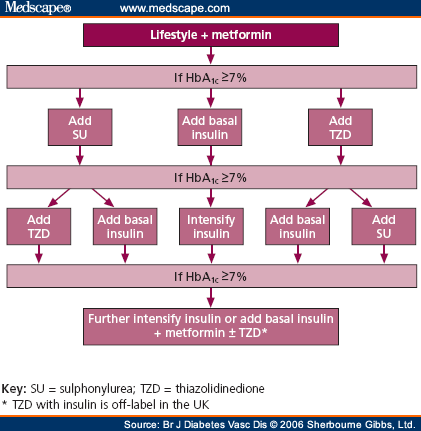
In the same vein, rules-based medical practice runs similar risks. The mantra for diabetes control has been tighter is always better. However, the ACCORD study of tight glucose control demonstrated that targeting Hgb A1c levels below the current of 7 was associated with increased risk of death in patients affected with type 2 disease. It is fortunate that the infrastructure was actually in pace to test this practice, providing some cautionary feedback. We did not end up with the universe of primary care physicians who pushed the tight glucose control thing to the point of injury their patients.
Throughout much of medicine there is a healthy push for standardization of practice and development of tools to assess aggregate success or failure. The problem we face is in the absence of a known superior standard, what standard practices do we push for before we have determined the best ones available? For the financial industry, they had a similar situation which resulted in both good news and bad news. The good news is they did figure out how to get banks to comply with a standard set of rules. The bad news is they were the wrong rules.
However, creating rules and standard practices need to be viewed simply as starting points, not actual goals. The experience of the financial system over the past decade represents a cautionary tale and this is described in a WSJ piece "How regulators herded banks into trouble", written by Peter Wallison and published in this morning's paper.
http://online.wsj.com/article/SB10001424052970203833104577069911633739768.html?mod=WSJ_Opinion_LEFTTopOpinion&_nocache=1322941623984&user=welcome&mg=id-wsj
Like standard medical protocols, the regulatory framework within the financial sector has been put into place to reduce error and reduce the risk of bad outcomes. Like rules deployed in medicine, the rules in the financial sector attempted to encourage particular behaviors which were thought to lower both individual and systemic risks. The cautionary part of this tale centers on two flaws, neither one being unique to the financial sector.
First, what is viewed as being safe bets at one point in time turn out to be risky and tragically bad bets at a different point in time. At the time the Basel Accords were adopted in 1988, mortgage based securities were viewed as the lowest risk investments banks could hold. The rules put in place at the time strongly encouraged commercial banks to hold these securities through capital rules, specifically allowing much greater leveraging when holding these debts (>50 fold) than with corporate loans (<20 fold).
The consequences of this huge miscalculation are described by Wallison:
Although these rules are intended to match capital requirements with the risk associated with each of these asset types, the match is very rough. Thus, financial institutions subject to the rules had substantially lower capital requirements for holding mortgage-backed securities than for holding corporate debt, even though we now know that the risks of MBS were greater, in some cases, than loans to companies. In other words, the U.S. financial crisis was made substantially worse because banks and other financial institutions were encouraged by the Basel rules to hold the very assets—mortgage-backed securities—that collapsed in value when the U.S. housing bubble deflated in 2007.
Today's European crisis illustrates the problem even more dramatically. Under the Basel rules, sovereign debt—even the debt of countries with weak economies such as Greece and Italy—is accorded a zero risk-weight. Holding sovereign debt provides banks with interest-earning investments that do not require them to raise any additional capital.
Accordingly, when banks in Europe and elsewhere were pressured by supervisors to raise their capital positions, many chose to sell other assets and increase their commitments to sovereign debt, especially the debt of weak governments offering high yields. If one of those countries should now default, a common shock like what happened in the U.S. in 2008 could well follow. But this time the European banks will be the ones most affected.Rules were created which were thought to match capital requirements with risk. They did not and because they were so successful in standardizing behavior before the rules were validated, they ended up magnifying the very events which they were deployed to prevent. Compliance with rules substituted for actually thinking about actual risk.
In the same vein, rules-based medical practice runs similar risks. The mantra for diabetes control has been tighter is always better. However, the ACCORD study of tight glucose control demonstrated that targeting Hgb A1c levels below the current of 7 was associated with increased risk of death in patients affected with type 2 disease. It is fortunate that the infrastructure was actually in pace to test this practice, providing some cautionary feedback. We did not end up with the universe of primary care physicians who pushed the tight glucose control thing to the point of injury their patients.
Throughout much of medicine there is a healthy push for standardization of practice and development of tools to assess aggregate success or failure. The problem we face is in the absence of a known superior standard, what standard practices do we push for before we have determined the best ones available? For the financial industry, they had a similar situation which resulted in both good news and bad news. The good news is they did figure out how to get banks to comply with a standard set of rules. The bad news is they were the wrong rules.
Subscribe to:
Posts (Atom)