Stat counter


View My Stats

Sunday, December 4, 2011

Calling Miss Manners! Help with the rules for the game of Medical It.

As we have moved from hospital based medicine, an environment where direct personal interactions between various providers of care were the norm, to distributed care networks where care team embers are connected in an ad hoc manner, we have failed to develop the next generation of effective tools for communication. In addition, we have also failed to develop any standard etiquette to deal with the complexities of shared care responsibilities.

I have a referral practice, both in the ambulatory environment and in the hospital. When the care environments and the volumes of patients were smaller, I encountered colleagues who referred patients directly. We frequently occupied the same spaces. The etiquette was simple. I met them, We talked. They asked for my help. I asked for the specifics and addressed whether I thought I could add value. We both received immediate feedback.

I remember learning a great lesson from one such encounter when I was an intern. I was involved in working up a man with an abnormal chest x-ray in whom I detected an large subraclavicular lymph node. I wrote and order in the chart asking for a surgery consult with the terse request, please biopsy. A fellow intern on the surgical service who I saw on a daily basis pulled me aside and asked me to change the order, requesting instead that the Surgery Service evaluate the patient. He explained that his attending did not take well to being viewed as a biopsy technician and that we ask for our colleagues opinions and expertise, not simply their technical skills. I thought it was wise advice at the time.

I live and and work in a different world. The pace is much faster. The problems are more complex. Many of my colleagues have adapted their practices to be more focused. There is substantially less direct contact. The medical record has become entirely worthless beyond functioning as a billing compliance tool. The requests for help keep coming in except they are generally cryptic. One of my colleagues now describes the phenomena as a game of "medical It", harkening back to the days in childhood when we used to chase each other around, trying to unload the status of being "it" by tagging someone slower than you.

Every week, I get reams of records sent to me. Some physicians are very good about sending a cover letter explaining the purpose of the ask. That is the exception rather than the rule. Many of the records are hand written, unreadable, and I cannot determine who actually sent them. More recently I have been receiving copies of electronic records where I must play the "Where's Waldo" game. Somewhere in there is something relevant.

What I would like is a a very brief summary with the key points:

1. Who is making the referral?
2. What specific questions are you asking?
3. Is this a referral for diagnostic or treatment reasons?
4. Do you want me to manage the patient?
5. What time frame does this need to occur in? Is this medical or personal urgency?
6. Is there any other information that you believe to be crucial for me to know? Logistical, social or financial issues?

I have had discussions with some of my colleagues who believe that the most important element is to pick up the phone and call. While I think this is a nice gesture, it cannot replace an actual written communication. The telephone call tends to result in an unstructured communication which amounts to sending the message that "I need help" and "Can you see this patient?" After the call is over the specifics are often lost and if there are records to review, they often completely fail to communicate the specific issues above.

Taking the time to write something structured tends to require one to reflect, at least for a minute as to what the goals of the referral are? Unless we are simply engaged in the game of "medical It", we can and should stop to think for a moment as to who we are calling for help, specifically why we are calling, and what the care structure might look like after we have enlisted their help. However, if the purpose of the activities is to find another physician to unload care responsibilities, using the consult carpet bombing technique is likely effective to find a target, any target who might say yes. Furthermore ,if you appear sufficiently incompetent to the patient they are not likely to want to return to your care once they have found some other alternative.

This is not rocket science or medical science. It is simply communication etiquette. Etiquette is defined as "conventional requirements as to social behavior; proprieties of conduct as established in any class or community or for any occasion." It is simply not the case of being nice to peers or treating patients and peers with respect. This is important but it is not enough.  Communication etiquette in medicine needs to be functional in that it fosters clear and unambiguous information exchange. We are not there. We have assumed as we moved the face to face communication environment to a virtual communication environment that the pieces would automatically fall into place. Wishful thinking at best. More likely delusional.

One reason this has not happened is that this represents a non-billable activity. From the perspective of getting someone else to be it, it is simplest to delegate the task of referring out to someone else no matter how poorly the task is performed. Call and get an appointment. My job is done. Often the task is delegated to the patient whose level of understanding of the problem might be essentially non-existent. Why are you here? My other doctor wanted me to see you.Why? I am not sure?

We must all to realize this is simply not acceptable and that it is part of our job to at least think about the above questions before we attempt to refer a patient to one of our colleagues. This are basic elements of professional etiquette which should be hammered into medical students and residents and under ideal circumstances reinforced by behavior modeled by teaching physicians. Again, we are not there yet. Perhaps I need to get together with Miss Manners and write a book.


Saturday, December 3, 2011

A downside to moving toward standardization of medicine and rules based practice

We are moving the practice of medicine toward standardization of practice and rules based systems. I do not contest that this is a healthy movement and much can be garnered in terms of efficiency and creation of systems where specific practices can be assessed for their ability to deliver what the public needs.

However, creating rules and standard practices need to be viewed simply as starting points, not actual goals. The experience of the financial system over the past decade represents a cautionary tale and this is described in a WSJ piece "How regulators herded banks into trouble", written by Peter Wallison and published in this morning's paper.
http://online.wsj.com/article/SB10001424052970203833104577069911633739768.html?mod=WSJ_Opinion_LEFTTopOpinion&_nocache=1322941623984&user=welcome&mg=id-wsj

Like standard medical protocols, the regulatory framework within the financial sector has been put into place to reduce error and reduce the risk of bad outcomes. Like rules deployed in medicine, the rules in the financial sector attempted to encourage particular behaviors which were thought to lower both individual and systemic risks. The cautionary part of this tale centers on two flaws, neither one being unique to the financial sector.

First, what is viewed as being safe bets at one point in time turn out to be risky and tragically bad bets at a different point in time. At the time the Basel Accords were adopted in 1988, mortgage based securities were viewed as the lowest risk investments banks could hold. The rules put in place at the time strongly encouraged commercial banks to hold these securities through capital rules, specifically allowing much greater leveraging when holding these debts (>50 fold) than with corporate loans (<20 fold).

The consequences of this huge miscalculation are described by Wallison:
Although these rules are intended to match capital requirements with the risk associated with each of these asset types, the match is very rough. Thus, financial institutions subject to the rules had substantially lower capital requirements for holding mortgage-backed securities than for holding corporate debt, even though we now know that the risks of MBS were greater, in some cases, than loans to companies. In other words, the U.S. financial crisis was made substantially worse because banks and other financial institutions were encouraged by the Basel rules to hold the very assets—mortgage-backed securities—that collapsed in value when the U.S. housing bubble deflated in 2007. 
Today's European crisis illustrates the problem even more dramatically. Under the Basel rules, sovereign debt—even the debt of countries with weak economies such as Greece and Italy—is accorded a zero risk-weight. Holding sovereign debt provides banks with interest-earning investments that do not require them to raise any additional capital.
Accordingly, when banks in Europe and elsewhere were pressured by supervisors to raise their capital positions, many chose to sell other assets and increase their commitments to sovereign debt, especially the debt of weak governments offering high yields. If one of those countries should now default, a common shock like what happened in the U.S. in 2008 could well follow. But this time the European banks will be the ones most affected.
Rules were created which were thought to match capital requirements with risk. They did not and because they were so successful in standardizing behavior before the rules were validated, they ended up magnifying the very events which they were deployed to prevent. Compliance with rules substituted for actually thinking about actual risk.

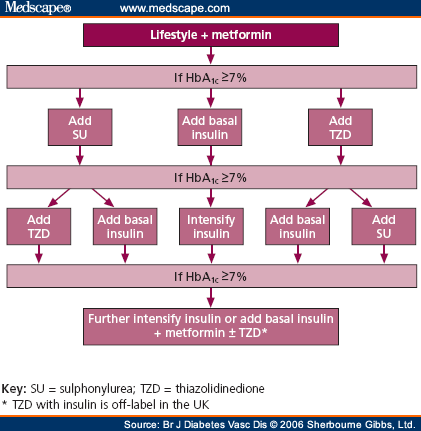
In the same vein, rules-based medical practice runs similar risks. The mantra  for diabetes control has been tighter is always better. However, the ACCORD study of tight glucose control demonstrated that targeting Hgb A1c levels below the current of 7 was associated with increased risk of death in patients affected with type 2 disease. It is fortunate that the infrastructure was actually in pace to test this practice, providing some cautionary feedback. We did not end up with the universe of primary care physicians who pushed the tight glucose control thing to the point of injury their patients. 

Throughout much of medicine there is a healthy push for standardization of practice and development of tools to assess aggregate success or failure. The problem we face is in the absence of a known superior standard, what standard practices do we push for before we have determined the best ones available? For the financial industry, they had a similar situation which resulted in both good news and bad news. The good news is they did figure out how to get banks to comply with a standard set of rules. The bad news is they were the wrong rules.


Saturday, November 26, 2011

More on risk

I found that Megan McArdle presents yet another view on attempts to domesticate risk...
http://www.theatlantic.com/business/archive/2011/11/the-limits-of-risk-engineering/248357/

Thursday, November 24, 2011

Trying to plug innovative ideas into legacy structures

We are in the midst of reworking our processes associated with the flow of patients in ambulatory practice. We have the laudable goal of making the process more functional and better at actually meeting patient goals. It is unquestionably the right thing to do. However, the devil is always in the details.


We have examined how we interface with patients, what information we need to collect for financial reasons and what information we need to collect for compliance reasons. The key driver of this is the Federally mandated meaningful use of EeMR. As an afterthought, we are also considering what information we need to collect for diagnostic and management issues particular to specific encounters. 

When assessed prospectively, the amount of information that needs to be collected and inputed in a structured way in the ideal world is mind boggling. The question is whether this task actually be accomplished in the very brief scheduled encounter times which are part of outpatient practice? However, perhaps the more relevant question is why we would even try to do this in the first place.

Within the context of re-examining our work flows, we seem to be examining virtually all assumptions except one; the encounter based model where everything must and should be done within a ridiculously brief encounter. While I may have major disagreements with our soon to be former CMS Chief, I completely agree with Don Berwick in that our encounter based model of delivering medical care is a problem.

There is absolutely no reason that virtually all information which is now extracted by asking patients in the office could not be done prior to the visit, and I am not talking about five minutes ahead of time. Who knows better than the patient what medications they are actually taking and what better place for them to address this question than at home in front of the very pill bottles that their medications come from? Why should we wait for them to come to the office, charge costly personnel with the task of trying to sort this out until severe time constraints, and then input what could have been inputed by the patient, more accurately, and at lower cost?

The same goes for virtually any piece of information where the ultimately source of the information is the patient. New complaint? Old complaint with ongoing symptoms? In each case, relying on a member of the medical team to ask the right questions, listen effectively, remember what is important, and record this accurately, all within severe time constraints is simply a formula for error generation. For most patients and their needs, off loading these tasks and information collection to a time where the tasks can be done with fewer time constraints and by someone more vested in getting the right information loaded simply makes sense.

Until we re-examine the utility of using brief encounters as the underlying architecture of ambulatory care delivery, all the problems of information collection, data entry, and ultimately effective problem solving will remain sub-optimally addressed.

Sunday, November 20, 2011

The downside of socializing risks

Much has been made of governmental interventions with socialized financial risks while the gains of these same interventions appear to have been garnered by specific private parties (Wall Street vs. Main Street). However, state interventions which result in socializing risks are not limited to the financial sector. They essential permeate every state activity and create moral hazards at each turn.

There are two elements to life which are invariant and unchanging. First, everything changes. Second, risk is everywhere. Despite all of our technological progress, human existence is precarious and touched by risk constantly. Basically, every human institution has developed as a consequence of attempts to blunt and mitigate risk. Initial efforts required were to mitigate the risks of injury by the elements (freezing in winter), starving, being devoured by wild animals, or killed by enemies. In order to address risk, people can make efforts as single individuals, organize into groups voluntarily, or form organizations where membership and participation are compulsory. The latter essentially represent state or governmental entities which have the power to compel activity.

Fast forward to our modern era and the modern state. The modern era has brought us unprecedented private and state initiatives which were put in place to basically to mitigate personal risk. The development o the modern insurance industry was an essential innovation which was required for expansion of the modern economy. Many different strategies and products were deployed. However, innovations by private entities are always imperfect.and history is punctuated by repeated individual and institutional failures, often within financial institutions but certainly not limited to this domain.

Enter the state. The state has always play a role in socializing certain risks. There is a reasonable consensus that the risk of invasion should be socialized in the form a common defense organized by the state. The specifics may be problematic. The state's role in socializing risk has basically exploded in the 20th century with the creation of entities to protect against a host of risks; the risk of surviving into advances age,  the risk of illness, the risk of disability, and the risk of unemployment, the risk of making bad investments, and the risk of making unwise decisions in general.

The idea to increasingly move risk mitigation to states is seductive. It is simple. Why charge many different entities with risk mitigation when you can put all responsibility in one place? While it might appear attractive and simple, nothing could be farther from the truth. One entity means a singular approach which has as much chance of  being the wrong approach as it does the right approach. In addition, placing risk mitigation in the hands of the state consistently results in application of actuarial models which are biased toward under funding with the knowledge that states are back stopped by what appears to be the unlimited deep pockets of the taxpayer. Once you get people hooked on the promise it is easier to hike taxes and borrow from future generations.

What could be more seductive than a promise to mitigate the risk of the cost of illness or the risk of outliving your savings? The lessons of these entitlement programs are very stark. Every actuarial estimate regarding the cost of these programs (Medicare, Medicaid, and Social Security) were off, not subtly but off by orders of magnitude. Private entities who make such bad bets (for example in  pensions) go broke. The same may be true of states but the displacements that result are so much more tragic.

One product of all this activity is the creation of the belief that states are the most effective entities which can mitigate risk. There is little empiric evidence that this is the case. Perhaps the worst hazards associated with this belief system are the moral hazards where embracing the idea that state risk mitigation activities insulate people and entities from risky behaviors, thus influencing behaviors in such a way which increase the likelihood of the very things we all want to avoid. Risks will always be with us and the greatest tool to mitigate risks is personal awareness that our activities can either put us at or mitigate risk. If we believe that state programs can insulate from our own stupidity, we tend to act stupidly.

Saturday, November 19, 2011

Meaningful insights from OWS are like French military victories

I do not know where to start in terms of this video from the John Stewart Program. It is absolutely a must watch and chock full of all sorts of ironies. 

http://www.thedailyshow.com/watch/wed-november-16-2011/occupy-wall-street-divided

If there was ever any question regarding the complete lack of coherent message of the OWS, this video puts that question to rest. I particularly thought the man who attempted to make a distinction between private property (other people's stuff) and personal property (his iPad2) was particularly incoherent and devoid of insight. 


Thursday, November 17, 2011

When there are no more options

If there was ever hard evidence that people are the drivers of wealth generation, current day Detroit is it. It also provides evidence that manana faith based economics paves a road to financial catastrophe. Detroit is showing where Greece will end up down the road.
http://www.freep.com/article/20111116/COL33/111160318/Stephen-Henderson-Detroit-s-clock-striking-midnight

Stephen Henderson's article in the the Detroit Free Press  "Detroit's clock is striking midnight" is a sobering account of the end game for a city which has failed to come to grips with a culture which made promises it could not keep. Detroit now finds itself incapable to funding the most basic of services and even if they completely stopped delivering services to current residents and succeeded in maintaining their tax base (not a likely proposition), they could not meet their pension and health care obligations to their retirees.

Detroit represents a microcosm of where we are heading nationally. Private entities recognized long ago that their financial survival depended upon moving their employees to defined contribution retirement programs. Those entities that failed to act are not longer around. State entities have been insulated thus far from these pressures but governmental entities that make bad bets can also fail. These failures have been isolated and have been small cities (with the exception of NYC near failure in the 1980's). That is about to change. It would make sense for the state of Michigan to intervene, but the state does not have the resources to step in  and guarantee all the entities that will line up if that window is opened.

The federal government has been trying through a variety of mechanisms to take the pressure of states such as California, Illinois, and New York using underwriting of bonds to forestall the inevitable. If states used this backstopping to to create a window of opportunity to get their respective houses in order, it might have dampened the blow. However, all this has accomplished is to allow states to avoid having to come to grips with their pension and entitlement pathology.

The lesson is clear from Detroit. Promises that you cannot afford + no growth environment + changing demographics smaller workforce = financial calamity.