
I was born into a unique generation in the history of mankind. My generation in the US was the first generation which grew up with almost no fears of infectious disease. The polio epidemic, which raged in its worst form immediately prior to my birth, was reigned in by the miracle of the Salk and Sabin vaccines. The antibiotic era began immediately before and one remarkable agent after another was brought to market in my childhood. While there were a number of childhood diseases which I had to weather (measles, mumps, and varicella), the terrifying scourges were for the most part vanquished.
For the next few decades, we became increasingly complacent about vaccination and these diseases which became of interest mostly because of historical interest. The memory of polio, whooping cough, diphtheria, measles, and chickpox became increasingly distant. Yes, if you cut yourself and appeared for acute care you received a tetanus shot, almost like some sort of religious ritual. Throw some salt over your left shoulder or say gesundheit when someone sneezes or coughs. No one gets those diseases anymore, do they?
The general public had increasingly fewer and fewer reference points to judge the need for vaccinations. The generations which experienced infantile paralysis or other less harrowing childhood diseases are dying off and the reality of such diseases have become nothing but distant echos. It is not at all surprising that skeptical voices have emerged. While I believe that these voices as relating to vaccine issues are barking up the wrong tree, I also believe it is important to cultivate skeptical voices. Expert classes tend to become increasingly insulated and self serving over time and the skeptical voices are important to provide feedback from broader, non-expert audiences who ultimately the experts must answer to.
An experiment has been done. The subjects unfortunately were the children of parents who were skeptical of the value of the measles vaccine. The results were the re-emergence of isolated pockets measles. The feedback is if you don't vaccinate your children they are at higher risk of getting sick. The news has been widely broadcasted. There is value in this. One could argue that children should not suffer the consequences of bad judgements of their parents. That however can never be avoided and the risks of striving to use the power of the state to reach those utopian goals will result in much more harm than could ever be perpetrated by the isolated bad judgement of selected parents.
Those of us who make bad decisions (which is all of us sometime) can serve useful functions when the unfortunate circumstances which befall us become apparent to those around us. We can but should not insulate people from the consequences of their bad decisions. Bad outcomes provide the feedback that tells us that we should not have done specific things. In the case of the parents who make unwise decisions regarding vaccination, we should not be timid about pointing out the errors. However, we also should not deploy tyrannical approaches in an attempt to reign in all sorts of bad judgements. It won't work and it runs the real risk of putting power into the hands of people and entities which want to run peoples lives.
I envision there will always be an ebb and flow when it comes to compliance with vaccination. As we are more successful with vaccine adoption the rates of disease will go down, but over the time the rates of complacency will go up, resulting in lower vaccination rates and resurgence of disease. It should be self correcting except for places such the Swat Valley. It may be unfortunate but the voices of science cannot fight complacency nearly as effectively as the predictable resurgence of disease in a complacent population.
Sunday, February 15, 2015


Saturday, January 31, 2015
Title IX hysteria
I am supposed to live in an academic world where we value critical thinking skills. However, I have a growing concern about the clash between the skepticism required for reflective thought and the academic embrace of advocacy driven "scholarship". Nowhere is this more apparent than the recent injection of Title IX fever into college campuses, driven by a zealotus Federal bureaucracy.
Stories about an epidemic of sexual violence on college campuses have peppered the new outlets this past year. There is an industry out there looking for growth opportunities in this realm and some within the industry do not appear to be constrained by any desire to operate driven by fact or truth. One of the more egregious examples centered around the story that came out of the University of Virginia which was reported in Rolling Stone magazine. Whether it represented a complete or partial hoax is not entirely clear but there is no question that many if not most of the story's details were completely implausible.
However, recent initiatives driven by the Federal government have been driven by the impression that there is a huge problem on college campuses which can only be addressed by imposition of new rules driven by the Feds. The leverage they have is through the federalization of higher education funding which allows them to hold virtually all colleges hostage to whatever bureaucratic whim is fashionable in Washington DC.
The data which appears to justify such an overarching reach by the Feds has been called into question. There is a figure thrown around of 1 in 5 women as being a victim of sexual assault. This figure comes from a 2007 survey from the DOJ. Shortly after this study was reported in a story in Slate, a much larger survey done the Justice Department Bureau of Justice Statistics found a rate of 0.6%, substantially lower than the 20% figure previously reported. The former study involved two unnamed public universities while the latter surveyed 90,000 households and 160,000 individuals encompassing a much broader swath of students.
Imagine my surprise when I received an email from my Title IX compliance officer ordering me and all of my colleagues to take a course regarding sexual violence on campus. When the Feds say jump, we say, how high? This enterprise comes directly Whitehouse.gov(Campus assault). Consistent with his activist roots, President Obama does not appear to be troubled by citation of the questionable 1 in 5 statistic. Advocacy is generally not effective when accompanied by any sort of self reflection of self skepticism.
To further my surprise, when I logged into the learning module to "educate" me and bring my into compliance with Title IX training, what statistic was placed immediately front and center? The same 1 in 5 number . I went online and did an internet search for Title IX training materials and what did I find in these as well? The same statistic. If I were grading a presentation by one of my students and I found that they had chosen to highlight a single study which was flawed and ignore information from more robust studies, they would get a failing grade.
However, I soldiered through the roughly one hour course, clicking through a series of scenarios and questions, picking the "right" answers. The scenarios were ambiguous and the exercise resembled an indoctrination more than an educational activity. The scenarios dealt with perhaps the most complex, difficult, and ambiguous contexts of human interactions; sexual encounters and alcohol. Each one perhaps could serve as a starting point for thoughtful discussions which might go on for an entire semester and PhD ethics thesis. However, in this training session and in final exam, I was called upon to pick the one and only right answer. I was being put on notice. No input was asked of me and there is essentially no mechanism where I can provide feedback on this. I understand. No feedback is wanted.
More than two dozen luminaries within the Harvard Law School have come out with a statement protesting their University's new rules regarding title IX. They have the standing and legal scholarship to do so. I do not. I know in my heart that continuation in the direction will end badly for most of us. The same people who vetted the online training courses have already shown they are not objective and will not let disparate opinions and data get in the way of furthering their particular lines of advocacy. Yet, they are ones who will be put in charge of adjudicating Title IX issues on campus. They will direct investigations, oversee tribunals, and render decisions.
Colleges and universities are in a similar position to me. They are not in a position to bargain with the Feds. To much money is at stake and there is no foreseeable pathway to success that can be envisioned by confrontation. The risk of losing the income stream driven by fully federalized tuition loans, federal research grants, and federal health care dollars. Monopsony in business has its downside.
Human interactions are complex. Human sexual relations are the most complex subset of interactions within these interactions. I will be the first to admit we have not yet worked out all the rules on this realm, despite working on them for thousands of years. What the Federal government is trying to do is to create some sort of separate formal review and response structure on college campuses based upon the idea that an urgent need exists. That perceived need is likely based faulty data. The solutions proposed ignore basic concepts of due process and protection of the accused. It seems like such a bad idea. However, very few are in a position to raise our concerns.
Sunday, January 11, 2015
The world is a work in progress
I saw the movie "Imitation game" last night. It is about Alan Turing and his efforts to break the Nazi Enigma code in WWII. It was simply a tragedy of epic proportions that the world lost him at the young age of 41, after he was convicted of solicitation of homosexual sex and forced under court order to take medications which chemically castrated him. Britain at that time considered homosexuality a crime. He committed suicide in the year of my birth.
I remember my first exposure to homosexuals when I was in college. There were a cadre of effeminate men which I did not recall from my high school experience. I may have simply been unaware of this cohort earlier in my schooling. I was rather young and not tuned into these issues. The thought of being attractive to other men was completely alien to my preferences. It had simply never even occurred to me that could be an option at that point in my life. However, I could not consider that homosexuality was a crime at that time, although I think anti-sodomy laws were on the books. They may still be on the books.
This particular cohort at college was almost universally ridiculed among those who I associated with. At that point in time I did not view this with any sort of moral dimension. I perceived this cohort simply as something very strange. I never acted in a way to personally ridicule anyone for their apparent homosexuality. However, I also did not take any action to step up in defense of anyone or call anyone out on their anti-homosexual actions. Knowing what I know now, I could have been more heroic in coming to the defense of those who were identified as being homosexual men. I was simply struggling to find my way at that time.
Roll the clock forward more than forty years. The world is a very different place. I am a very different person or at least I have a very different perspective on my world. I have had the experience of meeting literally thousands of people, both personally and professionally. I have come to realize just how remarkably diverse people are in terms of motivation, responses to incentives, preferences, talents, virtues, and vices. I have come to realize that David Hume was correct in terms of "reason being a slave to passion" and that many if not most of our passions are beyond our choice.
The world is a simpler place when the choices are binary. It makes for simpler law and simpler choices in the personal realm. However, the world is generally not black and white in terms of our choices. The growing acceptance of homosexuality and what could viewed in historical terms as atypical sexual practices is a product of recent decades in a small subset of human cultures. It may be viewed as part of a longer term trend in human societies of greater acceptance of diversity in general. It is my belief that this is a consequence of greater human affluence in general.
Cultures which live on the edge have less reserves to play with. Mistakes which affect the ability to feed or defend themselves literally can represent existential threats. An almost universal characteristic of human societies has been to hold anyone or anything that is different with great suspicion. Call it the stranger heuristic. The default response to strangers was violence. The default response to almost everything was violence. In a zero sum world which was the world until that past 500 years, that response may have had some survival advantages.
I have had the opportunity to live and experience a world where we can tolerate outliers. In fact, our world may benefit from harnessing the talents of those who we might view initially as strange. It is not as if we cannot define certain actions as unacceptable. We need to re-examine what we might have viewed as outside the bounds as acceptable. We will not all agree on what is acceptable or not acceptable but we should be very careful about using the coercive power of the state to enforce anything but the most egregious and unacceptable actions. On the flip side, we should also allow leeway to individuals to define their own comfort zones, using social sanctions to provide feedback to those within voluntary social networks. The world is a work in progress.
Saturday, January 10, 2015
Needing an industrial revolution in healthcare
I recently finished a Teaching Company course on the Industrial Revolution, taught by Dr. Patrick Allitt. In this course he detailed the development of industrialization of manufacturing over the course of almost 500 years. It is a remarkable story of human ingenuity, technological progress, and extraordinary impact on the human condition. He presents a story of a world not so long ago where human existence was precarious because the tools and systems in place to meet human needs were rudimentary. The remarkable development of industrial technologies in conjunction with effective approaches to motivate and coordinate human activity resulted in a complete transformation of human existence where these tools were deployed.

The progress did not take place in a straight line. There were failures and the achievements made were the product of much tinkering and some planning. The exact outcomes were not necessarily predictable but the themes in retrospect were recurrent. At each step of the way, huge breakthroughs happened when tools were developed that freed humans from manual tasks and automated activities. These breakthroughs were almost always very disruptive of selected industries and populations but the net effects for the broader population were hugely positive. People got more to eat at lower prices as well as better living and working conditions.
Another aspect of this evolution was the ability of the industrial revolution to deliver not only more, but more at a lower price and higher quality. Nowhere is this more evident than in the 20th century where we observed an explosion of increasingly sophisticated consumer goods where after particular product introductions prices would tumble while simultaneously the functionality and quality increased. This includes computers, home appliances, and automobiles. What drove this remarkable expansion of high quality plenty was a combination of science, breakthroughs in human organization, and information systems which could track key elements of cost and quality.
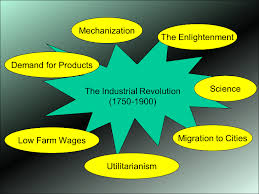
Dr. Allitt tracks all of these elements going back to their origins, which he tracks back to the building and operation of large ships in England. What does this have to do with medicine and biomedical research? Simply that the health care delivery and research relating to health care benefits from the same tools which made the industrial revolution possible. The holy grail for basically any human activity is to get more out of any particular inputs in terms of making human lives better. It has been well documented that, unlike the productivity gains associated with virtually all commercial activities in the US since WWII, health care has shown essentially no productivity gains. As noted by by Kochner, et all in the NEJM (N Engl J Med 2011; 365:1370-1372October 13, 2011DOI: 10.1056/NEJMp1109649):
The story in biomedical research is perhaps a bit more nuanced. Biomedical research has revolutionized diagnostics and therapeutics but we are facing issues of diminishing returns. The antibiotic and vaccine revolution deployed in the early to mid 20th century made huge impacts at very modest cost. Arguably the returns of these endeavors dwarfed the costs of development and deployment. We are at a different point now where the cost of new drugs to treat chronic diseases is simply off the charts. Every new decade moves the decimal place over one place. Furthermore, the deliverables for individual researchers is not necessarily something that has an impact on people in the near term. The funding system values a different sort of productivity based upon publications. The explosion of scientific publishing has until recently, not been accompanied by any real change in the mechanics of vetting and review and the problem which has arisen is one of quality control.
However, funding agencies have attempted to develop models to oversee quality and independent entities such as Retraction Watch (http://retractionwatch.com/) have stepped up to inject quality control in the process not adequately addressed with peer review. Not surprisingly there has been an explosion of paper retractions as well as exposees revealing major issues with reproducibility (Nature article). This is very disturbing because what separates science from magic and alchemy is the ability to reproduce results.
What all of these contemporary processes have in common is they are very dependent upon human beings using manual processes and judgement requiring much subjectivity to do their jobs. Furthermore, the products of these efforts cannot be readily and consistently assessed for quality. As long as these remains the case in health care delivery and biomedical research, it will be hard to reap the sort of gains from investment in these sectors when compared to investments made in areas where productivity and quality can be assessed more robustly.
The progress did not take place in a straight line. There were failures and the achievements made were the product of much tinkering and some planning. The exact outcomes were not necessarily predictable but the themes in retrospect were recurrent. At each step of the way, huge breakthroughs happened when tools were developed that freed humans from manual tasks and automated activities. These breakthroughs were almost always very disruptive of selected industries and populations but the net effects for the broader population were hugely positive. People got more to eat at lower prices as well as better living and working conditions.
Another aspect of this evolution was the ability of the industrial revolution to deliver not only more, but more at a lower price and higher quality. Nowhere is this more evident than in the 20th century where we observed an explosion of increasingly sophisticated consumer goods where after particular product introductions prices would tumble while simultaneously the functionality and quality increased. This includes computers, home appliances, and automobiles. What drove this remarkable expansion of high quality plenty was a combination of science, breakthroughs in human organization, and information systems which could track key elements of cost and quality.
Dr. Allitt tracks all of these elements going back to their origins, which he tracks back to the building and operation of large ships in England. What does this have to do with medicine and biomedical research? Simply that the health care delivery and research relating to health care benefits from the same tools which made the industrial revolution possible. The holy grail for basically any human activity is to get more out of any particular inputs in terms of making human lives better. It has been well documented that, unlike the productivity gains associated with virtually all commercial activities in the US since WWII, health care has shown essentially no productivity gains. As noted by by Kochner, et all in the NEJM (N Engl J Med 2011; 365:1370-1372October 13, 2011DOI: 10.1056/NEJMp1109649):
Of the $2.6 trillion spent in 2010 on health care in the United States, 56% consisted of wages for health care workers. Labor is by far the largest category of expense: health care, as it is designed and delivered today, is very labor-intensive. The 16.4 million U.S. health care employees represented 11.8% of the total employed labor force in 2010. Yet unlike virtually all other sectors of the U.S. economy, health care has experienced no gains over the past 20 years in labor productivity, defined as output per worker (in health care, the “output” is the volume of activity — including all encounters, tests, treatments, and surgeries — per unit of cost). Although it is possible that some gains in quality have been achieved that are not reflected in productivity gains, it's striking that health care is not experiencing anything near the gains achieved in other sectors. At the same time, health care labor is becoming more expensive more quickly than other types of labor. Even through the recession, when wages fell in other sectors, health care wages grew at a compounded annual rate of 3.4% from 2005 to 2010.In addition, it is very difficult to demonstrate gains in quality as well. I contend that these two shortfalls are in fact related to the inadequacy in information systems used in health care. When you can't reliably track things, you end up wasting resources and generating poor quality products.
The story in biomedical research is perhaps a bit more nuanced. Biomedical research has revolutionized diagnostics and therapeutics but we are facing issues of diminishing returns. The antibiotic and vaccine revolution deployed in the early to mid 20th century made huge impacts at very modest cost. Arguably the returns of these endeavors dwarfed the costs of development and deployment. We are at a different point now where the cost of new drugs to treat chronic diseases is simply off the charts. Every new decade moves the decimal place over one place. Furthermore, the deliverables for individual researchers is not necessarily something that has an impact on people in the near term. The funding system values a different sort of productivity based upon publications. The explosion of scientific publishing has until recently, not been accompanied by any real change in the mechanics of vetting and review and the problem which has arisen is one of quality control.
However, funding agencies have attempted to develop models to oversee quality and independent entities such as Retraction Watch (http://retractionwatch.com/) have stepped up to inject quality control in the process not adequately addressed with peer review. Not surprisingly there has been an explosion of paper retractions as well as exposees revealing major issues with reproducibility (Nature article). This is very disturbing because what separates science from magic and alchemy is the ability to reproduce results.
What all of these contemporary processes have in common is they are very dependent upon human beings using manual processes and judgement requiring much subjectivity to do their jobs. Furthermore, the products of these efforts cannot be readily and consistently assessed for quality. As long as these remains the case in health care delivery and biomedical research, it will be hard to reap the sort of gains from investment in these sectors when compared to investments made in areas where productivity and quality can be assessed more robustly.
Sunday, December 7, 2014
Intentions are only part of the picture
I am no great fan of empowering the police to intervene in our citizens lives. I look at the current wave of outrage regarding police killing with a great deal of ambivalence. The deaths are a culmination of a host of circumstances and addressing police over reach will not be fixed easily. Drawing attention to these killings using protests is a step toward holding those responsible accountable. However, I believe it is reasonable to consider taking a broader view of who is accountable.
We need to remember who the police are and why they are employed. They are agents of the state and employed to enforce the law. The more laws and rules we have, the more we will need to employ police to enforce them. The more we desire to the state to micromanage the affairs of its citizens, the more intrusive the it becomes, through the actions of its enforcement agents which include the police.
At the most simple level, we need to understand that not all undesirable behaviors should be prohibited using the power of the law. However, that concept seems to be ignored as we increasingly embrace the view that many if not all undesirable actions should be curbed primarily via the use of state force.
Attempts to curb the use of alcohol resulted in an unmitigated failure which are understood under the term Prohibition. Prohibition (capital P) resulted in expansion of state powers, corruption of law enforcement, and creation of powerful crime syndicates. While prohibition of alcohol has all but ended, we have not abandoned a variety of other prohibitions (small P) including various drug prohibitions. They have has the same effects as alcohol prohibition and have been equally unsuccessful and perhaps even more destructive in terms of unintended consequences.
Prohibitions in general have resulted in resulted in expansion of police powers (all in the name of the war on drugs) and have served as the basis for civil seizure statues (blogged on earlier). The death of Eric Garner would not have happened if not for the state of NY heavily taxing cigarettes and creating incentives for creation of an underground economy. Professor Stephen Carter is cited by Ilya Somin (Professor of Law at George Mason University) in the Washington Post (Link):
On the opening day of law school, I always counsel my first-year students never to support a law they are not willing to kill to enforce. Usually they greet this advice with something between skepticism and puzzlement, until I remind them that the police go armed to enforce the will of the state, and if you resist, they might kill you.
I wish this caution were only theoretical. It isn’t. Whatever your view on the refusal of a New York City grand jury to indict the police officer whose chokehold apparently led to the death of Eric Garner, it’s useful to remember the crime that Garner is alleged to have committed: He was selling individual cigarettes, or loosies, in violation of New York law…..
The problem is actually broader. It’s not just cigarette tax laws that can lead to the death of those the police seek to arrest. It’s every law. Libertarians argue that we have far too many laws, and the Garner case offers evidence that they’re right. I often tell my students that there will never be a perfect technology of law enforcement, and therefore it is unavoidable that there will be situations where police err on the side of too much violence rather than too little. Better training won’t lead to perfection. But fewer laws would mean fewer opportunities for official violence to get out of hand.It’s not just cigarette tax laws that can lead to the death of those the police seek to arrest. It’s every law. Libertarians argue that we have far too many laws, and the Garner case offers evidence that they’re right.
As Carter notes, “activists on the right and the left tend to believe that all of their causes are of great importance. Whatever they want to ban or require, they seem unalterably persuaded that the use of state power is appropriate.” But we should always remember that “[e]very new law requires enforcement; every act of enforcement includes the possibility of violence.” If we really want to curb police abuses, we should think carefully about whether all the laws we have on the books are really worth killing for.
All powerful tools have the potential to do great good or great harm.
Politics, transparency, and appealing to our emotional brains
"It is hard to reason someone out of belief they did not reason into". I am not sure where I heard this quote. I know it was not mine but I do not who to credit it to. However, it really summarizes what I observed in the last political season.
When the campaigns began, candidates for the most part tried to take the high road, appealing to the voters on the basis of intellect and reason. I came to realize that these appeals were directed to what Kahneman and Tversky called system two, our cognitive brains. However, as the campaigns progressed and became more competitive, the focus of ads changed. The term often used by the commentators was "going negative". I realized that going negative simply meant changing from focusing on the cognitive brains of voters to their emotional brains or what Kahneman and Tversky called system one.
It only makes sense to do this given the role that our emotional brains play in decision making. Politics will always ultimately be decided by emotion. We are emotional creatures. Move something into the political realm and this is what you should expect. Don't be surprised when this happens.
Recognizing that voters respond at an emotional level to issues they may not fully comprehend on a cognitive level may be interpreted as believing that voters are stupid. The world is so complex and the amount of information out there to assimilate to understand the huge universe of issues is beyond the comprehension of any given human. When we run into situations where we do not have all the information to make deliberative decisions, we default to using our emotional brains.
The arrogant pricks out there use these circumstances to call the public stupid. I use these circumstances to highlight why certain decisions should not be moved into political spheres.
Truth and Error - Tragedy in Charlottesville
I am reading a book by Kathyrn Schulz entitled "Being wrong: adventures in the margin of error". The chapter I am reading now is Chapter 4: Our minds, part one: Knowing, not knowing, and making it up. At the same time I have been listening to and reading about the accounts from the campus of the University of Virginia that first appeared in Rolling Stone magazine. I have realized that what is in Schulz's book is relevant to the events in Charlottesville.
Everyone who has read the accounts was mortified by just how awful the events described were. I have to admit that when my wife first told me about this and read me excerpts, I was very disturbed but there were elements to this story which began to remind me of the fantastic accounts of preschool molestations (nicely summarized in Wikopedia http://en.wikipedia.org/wiki/Day-care_sex-abuse_hysteria). When the preschool molestation cases broke, which were high profile stories for more than a decade and resulted in likely innocent people spending substantial time in jail, I had a difficult time how people could report such stories, which were ultimately found to be false.
The UVA rape story now also appears to be coming unravelled. The account provided by "Jackie" turns out to be riddled with inconsistencies, so many that it is hard to fathom how a magazine such as Rolling Stone could have released such a story, without what appears to be very basic due diligence.
An explanation for these events may reside in our brains and how we remember. Our brains are much less than perfect in terms what and how we remember things. For example, in her book Schulz describes a woman who was literally blind to her own blindness. When asked to described an object placed in front of her, she would described it in detail. The problem was she was blind, literally. Despite this reality she created a detailed description of what she thought she saw and fully believed that object was there. She was blind to her own blindness. While these examples represented an extreme case of blindness to error and current state, we all seem to exhibit blindness to our own realities and errors. As Schulz notes:
Neisser went on to become a psychology professor and study memory failure, calling into question dogma about the veracity of recalled memories. As it turns out, our recollections of events such as the Kennedy assassination, the Challenger disaster, and the Twin Towers disaster may seem vivid but are almost always wrong, despite feeling so right. The numbers are pretty staggering. Neisser studied the Challenger disaster, asking students details the day after it happened and then three years later. Less than 7% of the second reports matched the initial reports. 50% were wrong in 2/3 of their assertions and 25% were wrong in every major detail.
How does this relate to what has happened in Charlottesville? The story broke two years after the events happened, although even the timeline must be called into question. When something happened is simply another detail which may or may not be recalled correctly. How does one call into question the recollections of someone who suffered a traumatic event without accusing this individual of lying or making things up? It seems that the norm is to recall things with many errors and it should not come as a surprise that her account has serious inconsistencies. All accounts of events in the past will have errors and we will be blind to them.
Truth can only be verified by some sort of recording which is done at the time of the event which ideally can be done independent of human filtering. That is a reality we have to live with. We will be frequently wrong but unfortunately often not in doubt, even when we might be completely wrong.
Everyone who has read the accounts was mortified by just how awful the events described were. I have to admit that when my wife first told me about this and read me excerpts, I was very disturbed but there were elements to this story which began to remind me of the fantastic accounts of preschool molestations (nicely summarized in Wikopedia http://en.wikipedia.org/wiki/Day-care_sex-abuse_hysteria). When the preschool molestation cases broke, which were high profile stories for more than a decade and resulted in likely innocent people spending substantial time in jail, I had a difficult time how people could report such stories, which were ultimately found to be false.
The UVA rape story now also appears to be coming unravelled. The account provided by "Jackie" turns out to be riddled with inconsistencies, so many that it is hard to fathom how a magazine such as Rolling Stone could have released such a story, without what appears to be very basic due diligence.
An explanation for these events may reside in our brains and how we remember. Our brains are much less than perfect in terms what and how we remember things. For example, in her book Schulz describes a woman who was literally blind to her own blindness. When asked to described an object placed in front of her, she would described it in detail. The problem was she was blind, literally. Despite this reality she created a detailed description of what she thought she saw and fully believed that object was there. She was blind to her own blindness. While these examples represented an extreme case of blindness to error and current state, we all seem to exhibit blindness to our own realities and errors. As Schulz notes:
In sum: we love to know things, but ultimately we can't know for sure that we know them; we are bad at recognizing when we don't know something; and we are very, very good at making stuff up.Which now brings me back to the controversies in Charlottesville. It seems that what people recall, particularly the details of especially traumatic events in their lives, is almost always wrong when examined later in their lives. Schulz tells the story of Ulric Neisser, who vividly remembered the day the Japanese bombed Pear Harbor (oddly enough 73 years ago today). The narrative he carried with him was that of a radio announcer interrupting a professional baseball game, telling the story of the surprise attack. Only later did he realize that the details of the story he carried with him were wrong. Professional baseball is not played in December.
Neisser went on to become a psychology professor and study memory failure, calling into question dogma about the veracity of recalled memories. As it turns out, our recollections of events such as the Kennedy assassination, the Challenger disaster, and the Twin Towers disaster may seem vivid but are almost always wrong, despite feeling so right. The numbers are pretty staggering. Neisser studied the Challenger disaster, asking students details the day after it happened and then three years later. Less than 7% of the second reports matched the initial reports. 50% were wrong in 2/3 of their assertions and 25% were wrong in every major detail.
How does this relate to what has happened in Charlottesville? The story broke two years after the events happened, although even the timeline must be called into question. When something happened is simply another detail which may or may not be recalled correctly. How does one call into question the recollections of someone who suffered a traumatic event without accusing this individual of lying or making things up? It seems that the norm is to recall things with many errors and it should not come as a surprise that her account has serious inconsistencies. All accounts of events in the past will have errors and we will be blind to them.
Truth can only be verified by some sort of recording which is done at the time of the event which ideally can be done independent of human filtering. That is a reality we have to live with. We will be frequently wrong but unfortunately often not in doubt, even when we might be completely wrong.
Subscribe to:
Posts (Atom)