
I mopped up my aging messages in my message box yesterday with the hope that I could take care of everything that was pressing before the holidays. I called one particular patient whose message intimated that he had suffered a complication from a recent treatment. This was a patient who I have followed for years from a variety of chronic conditions. I had seen him in the office more than a dozen times.
My impression of him from these generally brief encounters was that he was a pleasant man, rarely appearing in any distress. I knew he traveled from a modest distance and most recently, we had elected to have his care transferred to a facility closer to his home. He was approaching his 9th decade of life and suffering from a number of slowly debilitating conditions which made travel increasingly difficult, particularly a chronic neuro-degenerative disease. Still, from all outward signs, he appeared to be quite intact and robust.
I called him at home to inquire as to the nature of extent of his difficulties. As it turned out, he was feeling fine and the issues that initially prompted his call were sell on the way to resolution. However, the opportunity to speak to me in the relatively unhurried context of my call created an opportunity for him to share a whole host of questions and long standing issues. I listened intently.
As it turned out that despite seeing this gentleman repeatedly over many years, I hardly knew him at all. He was retired from the aerospace industry, something I had no inkling of. He was a keen observer of detail, recalling specific details of past encounters, particularly actions we did which were inconsistent over time. He noted variation in our staff activities, instructions they gave, and issues that appeared to develop as a consequence. He was a wealth of information which we might have benefited from if we had only listened to him.
As the conversation went on, he also went on to share some of the challenges he faced now with an ailing spouse and growing costs of her care. The time and financial burdens were actually rather staggering. I hadn't a clue as to what he faced. I began to wonder whether the incremental benefits he might derive from our frequent interventions might be viewed as not worth his investment of time and money compared to the benefits he might have received from investing his time and money elsewhere. Those considerations were never on my radar. I had what amounted to be an incomplete context to place my recommendations into.
As individual physicians what are our obligations to know these types of details regarding our patients? In the current model, it is simply not practical to delve into this type of detail and there are no incentives to do so. In reality, there are huge financial incentives to remain as ignorant as possible. Injection of personal complexities into the production model of medicine slows decision making, taking decisions which might be viewed in black and white terms to shades of gray. Shades of gray may not be compatible with efficiency, a euphemism for speed and throughput.
Can we actually do our jobs well if no one in the medical community deals with this? Is this a personal responsibility of patients to make their preferences known or at least delegate a family member or friend to advocate? I can't say for certain who should do this but it is reasonable to assume there are multiple possible approaches, most of which will not be deployed in our current system because they cannot be readily monetized. We can hope that such time consuming and complex activities will be available broadly based upon the spirit of volunteerism, but this represents a best can be described as an aspiration for the triumph of hope over experience.
Improvement in the delivery of health care ultimately requires better decision making and those decisions require a better understanding of the unique goals of individuals. If we representing those who assist in making those decisions are near complete strangers to those they are assisting, we will not be in a position to provide optimal guidance and perhaps will provide more bad advice than good.
Saturday, December 22, 2012


Saturday, December 15, 2012
The fallacies of intelligent Design - Unintended consequences and health insurance exchanges
In a previous blog, I noted that a fundamental difference between conservatives and liberals is that the later tend to focus on what should be while the former tend to focus on what can be. Perhaps no where is this now more evident than in the developing story on the deployment of health insurance exchanges. The ACA timetable for deployment of the exchanges calls for them to deployed and operational by October of 2013. it is now appearing increasingly unlikely that this has any real hope of actually happening. 
The NYT reported yesterday that it is likely that only 17 states will operate their own exchanges. As noted in the article by Robert Fear:
The remainder have chosen to forego this opportunity. The reasons are multiple but a common theme appears to be the lack of guidance which was forthcoming from the Washington DC bureaucracy. As noted the the NYT piece:
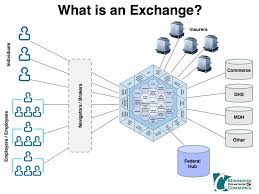
I have no particular desire to gloat. Innumerable patients I care for have taken this timetable to heart and are betting on the timely access to insurance which will provide them with affordable coverage independent of pre-existing conditions. I am concerned they have placed their hopes on something many would consider desirable but is not not feasible. Both are required.
When Nancy Pelosi proclaimed that the bill needed to be passed in order to see what what in it, it turns out she was not kidding. At the time the thought was that she was referring to the extensive document already written. However, this aspirational document represented only a shell of what will ultimately be needed. What appeared to be a good and grand idea gets a bit more complicated when the idea is to reconstitute perhaps 20% of the economy and make it micromanaged by federal bureaucrats.
This episode adds new meaning to the term "Intelligent Design". When political officials express skepticism regarding biological evolution and embrace concepts that the universe can and was designed by some intelligent being, they are ridiculed a being ignorant. I agree that those views are ridiculous and should be challenged. Complexity and durable complex systems do not develop as a consequence of top down architects.
Similarly, when human beings try to assume they can take on god like powers they are behaving in an ignorant fashion. I am sure that when HHS took on the task of simply providing guidance to states trying to build exchanges, they quickly found themselves in over their heads. No gods or intelligent design capacity there. I hate to imagine what they have ahead of them when they attempt to build exchanges for the remaining 33 states. These are entities which can evolve over time if the appropriate rules and selection pressures are applied. I have my doubts they can be the product of creation by people and institutions which are made of ordinary people.
The NYT reported yesterday that it is likely that only 17 states will operate their own exchanges. As noted in the article by Robert Fear:
The federal government and states face a series of deadlines in the new year. On Jan. 1, Secretary Sebelius must determine whether each state will be able to operate its own exchange in compliance with federal standards. By Feb. 15, states must notify the federal government if they want to help with selected tasks, like consumer assistance and the supervision of health plans, in partnership with the federal government.
On Oct. 1, consumers can begin to enroll in health plans, for coverage starting on Jan. 1, 2014, when most Americans will be required to have insurance.
The remainder have chosen to forego this opportunity. The reasons are multiple but a common theme appears to be the lack of guidance which was forthcoming from the Washington DC bureaucracy. As noted the the NYT piece:
In Tennessee, state officials did a huge amount of planning for a state-run exchange. But Gov. Bill Haslam announced this week that he had decided against the idea because the Obama administration had failed to answer numerous operational questions.
Gov. Chris Christie of New Jersey cited similar concerns in vetoing legislation to establish a state-based exchange last week.
“New guidance continues to trickle out of Washington at an erratic pace,” Mr. Christie said.
I have no particular desire to gloat. Innumerable patients I care for have taken this timetable to heart and are betting on the timely access to insurance which will provide them with affordable coverage independent of pre-existing conditions. I am concerned they have placed their hopes on something many would consider desirable but is not not feasible. Both are required.
When Nancy Pelosi proclaimed that the bill needed to be passed in order to see what what in it, it turns out she was not kidding. At the time the thought was that she was referring to the extensive document already written. However, this aspirational document represented only a shell of what will ultimately be needed. What appeared to be a good and grand idea gets a bit more complicated when the idea is to reconstitute perhaps 20% of the economy and make it micromanaged by federal bureaucrats.
This episode adds new meaning to the term "Intelligent Design". When political officials express skepticism regarding biological evolution and embrace concepts that the universe can and was designed by some intelligent being, they are ridiculed a being ignorant. I agree that those views are ridiculous and should be challenged. Complexity and durable complex systems do not develop as a consequence of top down architects.
Similarly, when human beings try to assume they can take on god like powers they are behaving in an ignorant fashion. I am sure that when HHS took on the task of simply providing guidance to states trying to build exchanges, they quickly found themselves in over their heads. No gods or intelligent design capacity there. I hate to imagine what they have ahead of them when they attempt to build exchanges for the remaining 33 states. These are entities which can evolve over time if the appropriate rules and selection pressures are applied. I have my doubts they can be the product of creation by people and institutions which are made of ordinary people.
The Pain of the Hedgehog
In today's Wall Street Journal, there was a very interesting article focusing on Dr. Russel Portenoy. (Portenoy) Dr. Portenoy was a instrumental driver of a movement in medicine to address the under treatment of pain. I remember this movement at or near its inception and have to admit it made sense to me at the time and for the most part, it still resonates, although mostly as it relates to acute pain.

Early in his career Dr. Portenoy had a big idea. He noted that opiates were extremely effective in the management of pain in patients affected with cancer. He envisioned that these drugs could be used in a much broader clinical context to treat chronic pain in patients who did not have cancer. He was very smart, and very articulate and these elements mixed with his passion for for what her believed in catapulted his agenda to the front and center of medicine and the public. He changed how medicine was practiced.
He was a hedgehog. Isaiah Berlin in his essay the "Hedgehog and the Fox" borrowed from the Greek Archilocus, to divide thinkers into two categories, hedgehogs and foxes. Hedgehogs believe single defining ideas while foxes draw on a much larger set of experiences and hold more skepticism that we can place as much stock in any single idea. Hedgehogs are much better positioned to move the needle on any given issue. They are better advocates because they tend not to be distracted by anything, including evidence which fails to support their big idea.
Dr. Pourtnoy overcame resistance to wider use of opiates using his powers of persuasion to convince skeptics that the dangers of opiate use were overstated. He believed at the time that the evidence did not support the concerns which had long limited their use. While he may have correct that the evidence did not support the dangers, his hedgehog biases also blinded him to the lack of evidence supporting their safe long term use. He confused strong belief with strong evidence. To his credit, he now appears to have recognized that his efforts have resulted in substantial unintended consequences and he would not have pursued the same agenda if he knew at the movement's inception what he now know now.
The world needs both hedgehogs and foxes. Too many foxes and no one will pursue big and bold ideas. However, too many hedgehogs results in too many big gambles. Furthermore, it also makes a difference where the hedgehogs and foxes reside.
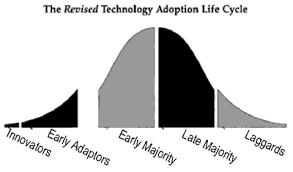
Within our world, we have people who are early adopters and others who are late adopters. That mix is great for creating "unfragile" entities. Early adopter can hit it big or can go down in flames. Late adopters can be so conservative that they relegate themselves to oblivion or they can serve as a reservoir to repopulate after the early adopters have done something crazy. It works because you have diverse groups hedging their bets in lots of different ways.
However, put a hedgehog in a position of authority and in charge of some entity which can compel others to uniformly embrace big ideas and you remove that diversity of response. In the world of pain management, the hedgehogs captured the power of medical licensing boards and used coercive tools to push their big idea.
 I have to admit I have my hedgehog tendencies, particularly relating to the deployment of data and data tools in medicine. It is my big idea (although do not take that to mean I conceived this). I think big ideas are fine as long as they are pursued within a particular framework. First, if at all possible, big ideas need to be pushed out within an environment where people have the right to decline them. No matter how good the idea sounds, it is desirable to have cadres of people who are free to reject them and exercise that freedom, even if they appear to be stupid at the time. Second, big ideas should be deployed in an environment which has feedback loops already in place. The concepts of improvement and progress are meaningless if there are no mechanisms in place to define where you started from and where you ended up. Finally, understanding success or failure, improvement, and unintended consequences often requires a time frame which is beyond the attention span of individuals or individual human lifetimes. What appears to be success after a few months or years, can translate into disaster after a few decades.
Early in his career Dr. Portenoy had a big idea. He noted that opiates were extremely effective in the management of pain in patients affected with cancer. He envisioned that these drugs could be used in a much broader clinical context to treat chronic pain in patients who did not have cancer. He was very smart, and very articulate and these elements mixed with his passion for for what her believed in catapulted his agenda to the front and center of medicine and the public. He changed how medicine was practiced.
He was a hedgehog. Isaiah Berlin in his essay the "Hedgehog and the Fox" borrowed from the Greek Archilocus, to divide thinkers into two categories, hedgehogs and foxes. Hedgehogs believe single defining ideas while foxes draw on a much larger set of experiences and hold more skepticism that we can place as much stock in any single idea. Hedgehogs are much better positioned to move the needle on any given issue. They are better advocates because they tend not to be distracted by anything, including evidence which fails to support their big idea.
Dr. Pourtnoy overcame resistance to wider use of opiates using his powers of persuasion to convince skeptics that the dangers of opiate use were overstated. He believed at the time that the evidence did not support the concerns which had long limited their use. While he may have correct that the evidence did not support the dangers, his hedgehog biases also blinded him to the lack of evidence supporting their safe long term use. He confused strong belief with strong evidence. To his credit, he now appears to have recognized that his efforts have resulted in substantial unintended consequences and he would not have pursued the same agenda if he knew at the movement's inception what he now know now.
The world needs both hedgehogs and foxes. Too many foxes and no one will pursue big and bold ideas. However, too many hedgehogs results in too many big gambles. Furthermore, it also makes a difference where the hedgehogs and foxes reside.
Within our world, we have people who are early adopters and others who are late adopters. That mix is great for creating "unfragile" entities. Early adopter can hit it big or can go down in flames. Late adopters can be so conservative that they relegate themselves to oblivion or they can serve as a reservoir to repopulate after the early adopters have done something crazy. It works because you have diverse groups hedging their bets in lots of different ways.
However, put a hedgehog in a position of authority and in charge of some entity which can compel others to uniformly embrace big ideas and you remove that diversity of response. In the world of pain management, the hedgehogs captured the power of medical licensing boards and used coercive tools to push their big idea.
Sunday, November 18, 2012
Diagnostic Error
I attended the meeting of the Society for Improved Diagnosis in Medicine this past week in Baltimore. This is a new society, being formally constituted within the past year, although this was the fifth meeting. Previously it had met with other groups, most recently the Society of Medical Decision making.

The major focus was one developing tools and approaches to define the scope of the problem which likely huge but difficult to define and quantify. It was a fascinating group of people which included physicians from a host of specialties. However, it was not limited to physicians and I would venture to guess that nearly half (and perhaps more than half) of the attendees were non-physicians, including many patients.
Even that characterization is not entirely accurate since every one of the attendees are currently recipients of some form of medical care, some more intensively than others. This is of note in that all inquiries into the sources diagnostic error and approaches to addressing diagnostic error interested with the patient communities. Their stories of harm were compelling and at times overwhelming. Their stories were not an add-on to the meeting but in fact central to it.
I was struck by the gulf that still separates patients from physicians and the health care delivery system, a gulf that is maintained by perceptions, processes, and desires to maintain power. However, as I heard the stories of patients, many of whom were very smart and sophisticated, I realized that the elements which maintain the separateness are the same elements which are a source of diagnostic error in the first place.
My perspective as a physician is shaped by the perceptions of those I trained with and those I work with. We view patient histories with great skepticism. What we hear from patients may not be accurate, relevant, or complete. That may be because they do not give us complete stories, not surprising since we demand they provide them under the most time constrained conditions where they suffer from significant performance anxiety. It may also because we fail to hear what they are trying to say and fail to give them sufficient time to reflect upon what the feedback we give them.

My residents often complain that I am able to elicit a history different from what they obtain. I found this very curious until I had a realization as to why this happens. Resident interviews act as a facilitator for patients to reflect upon what we as physicians want to know. Patients come into visits as poorly prepared as we do an questions offered by the residents surprise them. Answers obtained under those circumstances are often incomplete or wrong. However, in the time supplied after the resident leaves and I arrive, patients reflect and rethink their answers, having time to get their stories straight. No guile involved; just the opportunity for reflection improves the quality of the information delivered.
There were lots of interesting aspects of the conference and many interesting speakers. However, one specific session made a particular impression. It was very focused on the role of patients in addressing diagnostic error. The roles proposed proposed for patients raised in my mind the thought that addressing the problem of diagnostic error will require a fundamental change in how we view the role of patients in the diagnostic process. In each of the patient stories of missed diagnosis the opportunities for improvement and avoidance of similar events appeared to require an engaged and activated patient providing a feedback loop to the health care provider to avoid diagnostic pitfalls.
Once the patient is viewed as part of the diagnostic team, it creates the need to define boundaries and ownership. It was absolutely fascinating to hear the divergence of opinions between the physician and patient communities on where these boundaries should be and there was great concern that the unintended consequences of unfiltered information sharing could be dire. However, it was also pointed out that we survived having family access to delivery rooms and ICUs and that patient and family involvement has turned out to be an enhancement, not a detriment to healthcare delivery.

There is no question in my mind that the old model of care delivery has a short half-life. Patients want and deserve better .However, one particular attendee who was a primary care MD spoke up. He was a bit annoyed the primary care physicians were often pilloried as central characters in stories of harm. He urged patients to ask why their primary care physicians cut them short, ignored their complaints, and appeared to be unsympathetic. Providing thoughtful and reflective care using shared decision making takes time and effort. That fall squarely in the uncompensated or poorly compensated quadrant of physician efforts.
Most of the stories of harm and missed diagnosis could be linked back to insufficient time to hear or assimilate information from patients and to integrate all of the pieces. Circumstances and models where this does not happen now generally involve heroic efforts of extraordinary people and non-scalable or sustainable models of care. Patients may want and deserve better, but patient leaders need to understand they are dealing with an economic problem. The current administrative pricing structure in health care values physician activities required for reflective and shared care at essentially nothing. The price signals linked to these activities are telling doctors that there is no value in these activities and against this relentless tide of pressure, no one but the most heroic of physicians continues to resist.

Economic laws are almost as immutable as the law of gravity. It takes much energy to keep things from falling. Items valued as nothing tend to disappear over time. It is not surprising we have found ourselves with a scarcity of reflection and time spent with those who patients believe should be their advocates and counselors. Our own moral compasses as physicians tell us when we have time to reflect that we should provide this time to patients, whether we are paid to do so or not. However, that is simply unrealistic. As things stand now, we are the engines that support not only ourselves but entire teams of people who are almost completely dependent upon the revenue generating capacity of physicians. Thus, we make compromises and rationalize these decisions on the basis that overall we do overwhelmingly more good than harm and it is important to keep the lights on and the doors open. We do our own little bits of God's work and recognize that we cannot fix all of the world's ills.
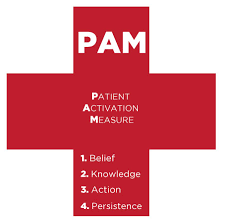
The payment system that fails to incentivize physicians to deliver what is needed to address diagnostic error continues and, for the most part, few recognize that the scarcity has been created by the dysfunctional administrative pricing system. While patient engagement is an essential piece to address diagnostic error, it is necessary but not sufficient. Patient engagement creates activated patients. However, this is of limited utility without activated clinicians. Some clinicians will become activated because of their moral compass but for the broader provider audience, activation will require financial rewards or at least the lack of financial deterrents. The sooner the activated patients realize this, the better off they will be.
The major focus was one developing tools and approaches to define the scope of the problem which likely huge but difficult to define and quantify. It was a fascinating group of people which included physicians from a host of specialties. However, it was not limited to physicians and I would venture to guess that nearly half (and perhaps more than half) of the attendees were non-physicians, including many patients.
Even that characterization is not entirely accurate since every one of the attendees are currently recipients of some form of medical care, some more intensively than others. This is of note in that all inquiries into the sources diagnostic error and approaches to addressing diagnostic error interested with the patient communities. Their stories of harm were compelling and at times overwhelming. Their stories were not an add-on to the meeting but in fact central to it.
I was struck by the gulf that still separates patients from physicians and the health care delivery system, a gulf that is maintained by perceptions, processes, and desires to maintain power. However, as I heard the stories of patients, many of whom were very smart and sophisticated, I realized that the elements which maintain the separateness are the same elements which are a source of diagnostic error in the first place.
My perspective as a physician is shaped by the perceptions of those I trained with and those I work with. We view patient histories with great skepticism. What we hear from patients may not be accurate, relevant, or complete. That may be because they do not give us complete stories, not surprising since we demand they provide them under the most time constrained conditions where they suffer from significant performance anxiety. It may also because we fail to hear what they are trying to say and fail to give them sufficient time to reflect upon what the feedback we give them.
My residents often complain that I am able to elicit a history different from what they obtain. I found this very curious until I had a realization as to why this happens. Resident interviews act as a facilitator for patients to reflect upon what we as physicians want to know. Patients come into visits as poorly prepared as we do an questions offered by the residents surprise them. Answers obtained under those circumstances are often incomplete or wrong. However, in the time supplied after the resident leaves and I arrive, patients reflect and rethink their answers, having time to get their stories straight. No guile involved; just the opportunity for reflection improves the quality of the information delivered.
There were lots of interesting aspects of the conference and many interesting speakers. However, one specific session made a particular impression. It was very focused on the role of patients in addressing diagnostic error. The roles proposed proposed for patients raised in my mind the thought that addressing the problem of diagnostic error will require a fundamental change in how we view the role of patients in the diagnostic process. In each of the patient stories of missed diagnosis the opportunities for improvement and avoidance of similar events appeared to require an engaged and activated patient providing a feedback loop to the health care provider to avoid diagnostic pitfalls.
Once the patient is viewed as part of the diagnostic team, it creates the need to define boundaries and ownership. It was absolutely fascinating to hear the divergence of opinions between the physician and patient communities on where these boundaries should be and there was great concern that the unintended consequences of unfiltered information sharing could be dire. However, it was also pointed out that we survived having family access to delivery rooms and ICUs and that patient and family involvement has turned out to be an enhancement, not a detriment to healthcare delivery.

There is no question in my mind that the old model of care delivery has a short half-life. Patients want and deserve better .However, one particular attendee who was a primary care MD spoke up. He was a bit annoyed the primary care physicians were often pilloried as central characters in stories of harm. He urged patients to ask why their primary care physicians cut them short, ignored their complaints, and appeared to be unsympathetic. Providing thoughtful and reflective care using shared decision making takes time and effort. That fall squarely in the uncompensated or poorly compensated quadrant of physician efforts.
Most of the stories of harm and missed diagnosis could be linked back to insufficient time to hear or assimilate information from patients and to integrate all of the pieces. Circumstances and models where this does not happen now generally involve heroic efforts of extraordinary people and non-scalable or sustainable models of care. Patients may want and deserve better, but patient leaders need to understand they are dealing with an economic problem. The current administrative pricing structure in health care values physician activities required for reflective and shared care at essentially nothing. The price signals linked to these activities are telling doctors that there is no value in these activities and against this relentless tide of pressure, no one but the most heroic of physicians continues to resist.
Economic laws are almost as immutable as the law of gravity. It takes much energy to keep things from falling. Items valued as nothing tend to disappear over time. It is not surprising we have found ourselves with a scarcity of reflection and time spent with those who patients believe should be their advocates and counselors. Our own moral compasses as physicians tell us when we have time to reflect that we should provide this time to patients, whether we are paid to do so or not. However, that is simply unrealistic. As things stand now, we are the engines that support not only ourselves but entire teams of people who are almost completely dependent upon the revenue generating capacity of physicians. Thus, we make compromises and rationalize these decisions on the basis that overall we do overwhelmingly more good than harm and it is important to keep the lights on and the doors open. We do our own little bits of God's work and recognize that we cannot fix all of the world's ills.
The payment system that fails to incentivize physicians to deliver what is needed to address diagnostic error continues and, for the most part, few recognize that the scarcity has been created by the dysfunctional administrative pricing system. While patient engagement is an essential piece to address diagnostic error, it is necessary but not sufficient. Patient engagement creates activated patients. However, this is of limited utility without activated clinicians. Some clinicians will become activated because of their moral compass but for the broader provider audience, activation will require financial rewards or at least the lack of financial deterrents. The sooner the activated patients realize this, the better off they will be.
Saturday, November 17, 2012
Turning the EHR into a project management tool
I have spent a few hours this morning finishing my notes from my clinic yesterday. It occurred to me that for each patient when my note was completed, I had a series of tasks which needed to be done in the future. However, the EHR I use is really poorly equipped to aid me in tracking my future tasks.
EHR's still tend to be used as documentation tools as opposed to something that adds value by helping our brains remember what needs to be done, what has been done, and helping us decide what should be done. There are circumstances where the EHR needs to function simply as a note generator, but that really barely touches upon where it can provide value.
For each patient who I follow long term, I need the equivalent of a project management tool since in many respect, the care of each patient is a long term project. For each patient I need to define what is on my to do list, what am I in the midst of doing, what specific action items are on my plate, and what have I delegated to someone else. At this point in time, the EHR I use does none of this well and many of the tasks it simply has no functionality to use.
Hard to believe that we continue to use such dysfunctional management tools.
EHR's still tend to be used as documentation tools as opposed to something that adds value by helping our brains remember what needs to be done, what has been done, and helping us decide what should be done. There are circumstances where the EHR needs to function simply as a note generator, but that really barely touches upon where it can provide value.
For each patient who I follow long term, I need the equivalent of a project management tool since in many respect, the care of each patient is a long term project. For each patient I need to define what is on my to do list, what am I in the midst of doing, what specific action items are on my plate, and what have I delegated to someone else. At this point in time, the EHR I use does none of this well and many of the tasks it simply has no functionality to use.
Hard to believe that we continue to use such dysfunctional management tools.
Wednesday, November 14, 2012
Medical Reformation
500 years ago, Martin Luther nailed his 95 thesis on the door of the local cathedral.
What this event marked was a dramatic change in the relationship of people with the most important human institution in western Europe at the time; the catholic church. Luther's actions was preceded by key technological advances of the day, most notably the development of the printing press by Gutenburg. Prior to the printing press, the church through the clergy controlled access to the printed word, primarily in the form of the bible. After deployment of the printing press, the holy bible, and all of the wisdom contained, was no longer was controlled by the priesthood. Then as now, he who controlled information controlled power.
Roll the clock forward to the last century. The status of physicians in the 20th century underwent a profound change. In the previous century, physicians held a status only slightly higher than barbers. With notable exceptions, most physicians has limited useful knowledge and few tools to deploy when confronted with serious medical situations. The developments of anesthesia, antisepsis, and antibiotics changed all that and by the mid portion of the 20th century, physicians held the status of gods. As Arthur C. Clark once noted, “When technology becomes sufficiently advanced, it becomes indistinguishable from magic”, and medical magic for most of the 20th century held the public is complete awe.
The continuation of awe was also facilitated by the relatively proprietary nature of the knowledge base behind which the medical magicians practiced. We held our cards close and as a rule the public was sufficiently intimidated to inquire further or question physician status.
The internet has begun to change all of this.
Like the printing press, it has taken cloistered texts and other writings out of the hands of the clergy, in this case the medical clergy, and made it available to all those who can search and read. The impact is profound and likely to become even more profound. Prior to the reformation, the catholic church firmly held to the belief that the bible and the information it contained was best controlled by the Church. So much was at stake, that being the souls and eternal fates of human beings. People simply could not be trusted with such responsibilities. Only the special priest class could be entrusted with such a role.
The arguments are being put forth by the medical priesthood. Too much as stake, and patients cannot be entrusted with their own lives. However, the genie is out of the bottle. The information is already out there and more will become available to patients every day. Some of it may be unreliable but the same can be said for what is vetted by peer review in our own fields. Furthermore, patients have an inherent advantage over their health care providers. They have much more time to invest in their own care and they have so much more skin in the game.
I saw the Medical Luthers posting their 95 theses on the door today. They are doing it everywhere. There may be health care providers who will excommunicate their Luthers. I am not sure they have much leverage. The relationship is going to be changed forever.
What this event marked was a dramatic change in the relationship of people with the most important human institution in western Europe at the time; the catholic church. Luther's actions was preceded by key technological advances of the day, most notably the development of the printing press by Gutenburg.
Roll the clock forward to the last century. The status of physicians in the 20th century underwent a profound change. In the previous century, physicians held a status only slightly higher than barbers. With notable exceptions, most physicians has limited useful knowledge and few tools to deploy when confronted with serious medical situations. The developments of anesthesia, antisepsis, and antibiotics changed all that and by the mid portion of the 20th century, physicians held the status of gods. As Arthur C. Clark once noted, “When technology becomes sufficiently advanced, it becomes indistinguishable from magic”, and medical magic for most of the 20th century held the public is complete awe.
The continuation of awe was also facilitated by the relatively proprietary nature of the knowledge base behind which the medical magicians practiced. We held our cards close and as a rule the public was sufficiently intimidated to inquire further or question physician status.
The internet has begun to change all of this.
Like the printing press, it has taken cloistered texts and other writings out of the hands of the clergy, in this case the medical clergy, and made it available to all those who can search and read. The impact is profound and likely to become even more profound. Prior to the reformation, the catholic church firmly held to the belief that the bible and the information it contained was best controlled by the Church. So much was at stake, that being the souls and eternal fates of human beings. People simply could not be trusted with such responsibilities. Only the special priest class could be entrusted with such a role.
The arguments are being put forth by the medical priesthood. Too much as stake, and patients cannot be entrusted with their own lives. However, the genie is out of the bottle. The information is already out there and more will become available to patients every day. Some of it may be unreliable but the same can be said for what is vetted by peer review in our own fields. Furthermore, patients have an inherent advantage over their health care providers. They have much more time to invest in their own care and they have so much more skin in the game.
I saw the Medical Luthers posting their 95 theses on the door today. They are doing it everywhere. There may be health care providers who will excommunicate their Luthers. I am not sure they have much leverage. The relationship is going to be changed forever.
Sunday, November 11, 2012
Speaking different languages about health care as a right
Now that the 2012 elections are over, there is a tendency for those whose perspective is more statist to view that they have received a mandate to go forward with their vision of health care reform. From my perspective, the election provides only the starkest of evidence of a closely divided country where a slim majority supported President Obama's vision of state driven health care changes.
Do not get me wrong. Our present system is terribly flawed and the trajectory of spending is unsustainable. There are constituencies who are committed to holding patterns attempting to extract as many rents from the current system as possible, hoping they can reach retirement age before their goose that lays golden eggs goes away. However, among virtually all thoughtful people there is almost complete agreement that what we are doing presently is not viable in the longer term. The issue is not whether change will happen but instead what that change will look like and who or what will drive it.
President Obama and his supporters tend to hold a belief system which places great confidence in the ability of the law to drive change and to structure human systems in such a way to that law is always a positive force. This belief system is predicated on the assumption that what is most important is the intent of the law and that smart people are fully capable of creating rules, often very complex, which can predictably result in improved incentives and improved outcomes. I should also note that professional politicians on both sides of the isle share this set of assumptions, albeit they may have different levels of confidence that the law can be used in different realms to coerce people to behave. Elements of both the left and the right can be all to willing to seize the reigns of a coercive state into order to bully other elements of the populace.
As I see this, the fundamental gulf that exists revolves around what groups view as the priorities of what the governing leadership should be. What are currently viewed as liberals or progressives (and I hate these terms) prioritize moving toward a world which should exists while conservatives (which is what I view myself as being) place priorities on moving toward a similar world but constrained by what can be. As I wrote about in an earlier blog, von Mises noted in his work "Human Action" (https://www.blogger.com/blogger.g?blogID=2308282620289958037#editor/target=post;postID=7269024980841579619), there is really little disagreement on the articulated goals of:
To me, the most important discussions should focus not on what we aim to achieve but instead on what is actually possible. Going all in aspiring to use the power of the state in order to strive toward a perfect world may sound good, but this experiment has been tried before. The product was not perfection but was instead perfectly awful. What limits our actions in regards to delivery of health care and specifically, what are the limits on state action? Why can't the state use the power of law to simply declare that health care is a right and that ALL those within the borders of the US should have access to health care?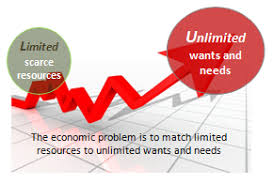
Obviously entire books have been devoted to this and I will not exhaustively delve into all aspects of this question in this essay. The undisputed fact that so much has been and continues to be written belies the complexity involved. However, at the simplest level, you cannot mandate access to what you cannot define, particularly when the definition of what you are referring to is constantly morphing and evolving. Making something a legal right backed by the coercive power of the state requires that you must define the scope of that right. Decentralized private markets and charities are much more nimble in this regard. What one party does at any given time can be distinctly different from other parties involved in similar activities. This is not the case for legal rights. If one cannot define the nature of the right involved, it moves the action, however desirable at a theoretical basis, into the realm of practically impossible. Every decision regarding what is covered can be moved from the personal and medical into the legal realm. If you don't believe this will become unmanageable almost immediately, please refer to the case of Michelle Koselek in Massacheusettes (http://www.cbsnews.com/8301-201_162-57520960/mass-officials-to-fight-murderers-sex-change/).
The issues with defining the scope of any health care right was recently highlighted in the NEJM (http://www.nejm.org/doi/full/10.1056/NEJMp1208386)in a piece by Neuman and Chambers entitled "Medicare's Enduring Struggle to define Reasonable and Necessary Care". In the article the authors note:
Neither necessary of reasonable is definable in any way meaningful way which will create any enduring structure which can address allocation of scarce resources. Neuman and Chambers dance around this issue and conclude by noting:
Thus they admit that the creation of Medicare requires implementation of one size fits all approaches to defining scope. Where will those decisions be made? Whatever the initial intentions of those charged with defining and implementation will be co opted in the realm where all government decisions are made; the political realm. Political allocation of resources yields decisions which generate votes. The political realm works in a winner take all environment where those who can muster tiny majorities can impose their wills on substantial minorities, even if their governance may be unwise.
If the purpose of actions is to strive toward some ideal, whether effective or not, then aspiration alone can be a measure of success. However, I aim for more and am fearful of Utopian aspirations used to justify concentrations of power as a means to attempt what may be theoretically desirable but is almost certainly not attainable in the world of imperfect humans playing politics.
Do not get me wrong. Our present system is terribly flawed and the trajectory of spending is unsustainable. There are constituencies who are committed to holding patterns attempting to extract as many rents from the current system as possible, hoping they can reach retirement age before their goose that lays golden eggs goes away. However, among virtually all thoughtful people there is almost complete agreement that what we are doing presently is not viable in the longer term. The issue is not whether change will happen but instead what that change will look like and who or what will drive it.
President Obama and his supporters tend to hold a belief system which places great confidence in the ability of the law to drive change and to structure human systems in such a way to that law is always a positive force. This belief system is predicated on the assumption that what is most important is the intent of the law and that smart people are fully capable of creating rules, often very complex, which can predictably result in improved incentives and improved outcomes. I should also note that professional politicians on both sides of the isle share this set of assumptions, albeit they may have different levels of confidence that the law can be used in different realms to coerce people to behave. Elements of both the left and the right can be all to willing to seize the reigns of a coercive state into order to bully other elements of the populace.
As I see this, the fundamental gulf that exists revolves around what groups view as the priorities of what the governing leadership should be. What are currently viewed as liberals or progressives (and I hate these terms) prioritize moving toward a world which should exists while conservatives (which is what I view myself as being) place priorities on moving toward a similar world but constrained by what can be. As I wrote about in an earlier blog, von Mises noted in his work "Human Action" (https://www.blogger.com/blogger.g?blogID=2308282620289958037#editor/target=post;postID=7269024980841579619), there is really little disagreement on the articulated goals of:
It is obvious that they do not differ from one another with regard to ends but only as to means. They all pretend to aim at the highest material welfare for the majority of citizens.
To me, the most important discussions should focus not on what we aim to achieve but instead on what is actually possible. Going all in aspiring to use the power of the state in order to strive toward a perfect world may sound good, but this experiment has been tried before. The product was not perfection but was instead perfectly awful. What limits our actions in regards to delivery of health care and specifically, what are the limits on state action? Why can't the state use the power of law to simply declare that health care is a right and that ALL those within the borders of the US should have access to health care?
Obviously entire books have been devoted to this and I will not exhaustively delve into all aspects of this question in this essay. The undisputed fact that so much has been and continues to be written belies the complexity involved. However, at the simplest level, you cannot mandate access to what you cannot define, particularly when the definition of what you are referring to is constantly morphing and evolving. Making something a legal right backed by the coercive power of the state requires that you must define the scope of that right. Decentralized private markets and charities are much more nimble in this regard. What one party does at any given time can be distinctly different from other parties involved in similar activities. This is not the case for legal rights. If one cannot define the nature of the right involved, it moves the action, however desirable at a theoretical basis, into the realm of practically impossible. Every decision regarding what is covered can be moved from the personal and medical into the legal realm. If you don't believe this will become unmanageable almost immediately, please refer to the case of Michelle Koselek in Massacheusettes (http://www.cbsnews.com/8301-201_162-57520960/mass-officials-to-fight-murderers-sex-change/).
The issues with defining the scope of any health care right was recently highlighted in the NEJM (http://www.nejm.org/doi/full/10.1056/NEJMp1208386)in a piece by Neuman and Chambers entitled "Medicare's Enduring Struggle to define Reasonable and Necessary Care". In the article the authors note:
Since its inception in 1965, Medicare policy has been guided by legislation mandating that the program not pay for items and services that are not “reasonable and necessary.” Over the years, amid escalating costs and the medical community's embrace of evidence-based medicine, the Centers for Medicare and Medicaid Services (CMS) has struggled to interpret and apply the “reasonable and necessary” criteria. At key junctures, CMS has been thwarted by political pressure or the courts. As Medicare spending takes center stage in the country's budget debates, “reasonable and necessary” warrants a closer look.
Neither necessary of reasonable is definable in any way meaningful way which will create any enduring structure which can address allocation of scarce resources. Neuman and Chambers dance around this issue and conclude by noting:
It may be tempting to believe that the matter will be rendered moot by payment reform and premium-support policies. That is, some may hope that the federal government can simply delegate coverage decisions to other parties, such as accountable care organizations, while forcing patients to consider the value of technologies through increased cost sharing. Such reforms are needed, since they will help move CMS out of the business of micromanaging coverage policy, though the details will be crucial. Offloading financial risk, however, does not absolve Medicare. Although it will shield CMS from certain controversies, questions will persist over how much geographic and socioeconomic variation in technology coverage the country will tolerate in a federal program. Moreover, the steady march of big-ticket, high-profile technology, such as cancer therapies, will demand a single response from Medicare regarding the adequacy and reasonableness of the evidence base.
Thus they admit that the creation of Medicare requires implementation of one size fits all approaches to defining scope. Where will those decisions be made? Whatever the initial intentions of those charged with defining and implementation will be co opted in the realm where all government decisions are made; the political realm. Political allocation of resources yields decisions which generate votes. The political realm works in a winner take all environment where those who can muster tiny majorities can impose their wills on substantial minorities, even if their governance may be unwise.
If the purpose of actions is to strive toward some ideal, whether effective or not, then aspiration alone can be a measure of success. However, I aim for more and am fearful of Utopian aspirations used to justify concentrations of power as a means to attempt what may be theoretically desirable but is almost certainly not attainable in the world of imperfect humans playing politics.
Subscribe to:
Posts (Atom)