Stat counter


View My Stats

Sunday, April 29, 2018

Who should drive cost control efforts in health care?

Ever since I was in medical school almost 40 years ago, we have been talking about the growth of health care expenditures and how the growth rate is unsustainable. Like the proverbial frog in the heated pot, we have adjusted to increasing costs as we approach the boiling point. I believe we are approaching the boiling imminently and payers at all levels are trying to figure out how they can remain solvent while at the same time finance needed health care spending. 

The WSJ published a piece in late March of 2018 highlighting that two major issues are creating financial challenges for state budget, pensions and health care, particularly Medicaid. (WSJ). The result is crowding out of expenditures on virtually all other state functions. The effects of growth in spending diffuse across all levels of payer, public and private. Private insurers are engaged in pitched battles with large and increasingly consolidated health systems over rates while at the same time trying to move costs back to consumers, increasing deductibles and co-pays. It is getting very ugly. We recently experienced a showdown between Piedmont Healthcare and Blue Cross within the Atlanta market which required the Governor to weigh in to get the parties back to the negotiating table.  

At the same time, CMMS is searching for innovative approaches to effectively deliver health care to its covered populations at lower costs (or at least at slower growth rates). They announced a requests for comments and information on 4/23/18 (CMMS RFI). The RFI throws out a host of ideas, driven by the theme of market based approaches. It is not especially cohesive or cogent. That is not surprising since no one knows the magic formula by which were can consistently do a good job at substantially lower costs. The request is just that: for input from interested parties who can assist them in their goals. 

The responses from the physician community are fairly predictable.  We do not want to act like insurers. We never have and it places us in a very conflicted position. It is essentially impossible to act as advocates for our patients while at the same time function as stewards of system resources. That job is unpalatable and is extremely difficult (perhaps impossible) to do. The AMA has weighed in on this (AMA cost control) and from what I can tell, they take the same tack as politicians who say they will balance budgets by eliminating fraud and abuse without recognizing the underlying structural faults. The amounts saved via the former interventions are rounding errors. The real work requires very fundamental changes in how programs are structured. To take that on means taking on vested interests directly. Professional organizations like the AMA are ill equipped to take these types on jobs on. They function as guilds and are driven by member concerns. 

The Physician community does not want to do the difficult and unpalatable work of driving cost control, acting like insurers, limiting care, and explicitly pushing costs on to patients.  However, we do not want to delegate that job to any other party. We want to be in control. It boils down to whether we as physicians want to lead and exert some degree of control over whatever processes are put in place to try to control costs or whether we present the face of resistance. It is clear to me that CMMS has no real clue as to drive cost savings but I do not think we are particularly constructive in our criticism. We are basically washing our hands of the problem for the simple reason that any solutions we can come up with will either result in transfer of costs to patients (which we believe will result in them balking at payment), decrease in the amount of care activity we are engaged with (with decreased revenue), or decrease the payment per unit of work.  We don't like any of these for obvious reasons but in my opinion, we still should come to terms with whether bending the cost curve is something which is desirable or really essential. If it is, then if not us to deal with it, who then should be empowered to address it? 

Sunday, April 1, 2018

Price fixing is not OK when you want to do it but is OK when I want to do it.

The NYT reports a story this morning on attempts of the state of Massachusetts to rein in the growth of spending on prescription drugs. Nothing new or surprising here. Medicaid costs are growing and projections across the board for all states are that if nothing different is done , Medicaid costs will crowd out all other state spending over the next 10-20 years.

The Massachusetts experiment is contingent upon getting a Medicaid waiver from the Feds. Seems reasonable given the basic premise of the waiver concept. Try things in a limited space and if they work, they can be adopted elsewhere. What is difficult to understand is the push back and particularly where the push back is coming from. The AMA, ACP, and the ACS, as well as a number of big pharmaceutical firms (J&J, Merck, Lilly, Teva, and Pfizer)  are pushing back against this proposal.

I get the drug companies resistance. They desire the largest degrees of freedom to push their pricing power. They may say they are motivated by getting the best drugs to patients and that may be true to some extent. We should not be so naive to believe that is their primary motivation. However, the MD professional societies are another matter, especially the AMA. Here you have an organization that is behind the largest price fixing apparatus in a segment of the economy that constitutes nearly 20% of GDP.

The mantra is that such efforts will limit patient access to life saving therapies. However, the ongoing price fixing actions of the AMA have limited patient access to life saving expertise for more than 25 years. We still allow for pharmaceuticals to be priced at various tiers based upon a host of factors but according to the AMA, all expertise is generic and linked to common billing codes which do not account for quality or unique expertise. That is entirely acceptable even though it has devastating effects on access to expertise, especially diagnostic expertise or chronic care management.

In digging deeper into the AMA position, I found this news story from Axios last October. It almost defies comprehension. (Axios Link)
Context: McAneny, an oncologist, made her comments in Chicago at a meeting of the AMA's Relative Value Scale Update Committee, an influential panel known as the RUC. A crowd member asked her if the AMA was "missing an opportunity to throw the weight of our collective influence" behind asking the federal government to negotiate drug prices, which Medicare cannot do by law.  The AMA has been outspoken about rising drug prices and the factors behind them. "There's a lot of places where we can look at significant amounts of waste," McAneny said after calling out pharmacy benefit managers, insurance companies and specialty pharmacies.
However, official AMA policy currently "opposes the use of price controls in any segment of the health care industry, and continues to promote market-based strategies to achieve access to and affordability of health care goods and services." Instead, it backs transparency measures like requiring drug companies to post prices in ads.
Looking ahead: The RUC's main business of examining new payment rates for physician services starts Thursday. Medicare has said it would adopt nearly all of the RUC's recommendations for the upcoming year.
Here we had the AMA President railing against price fixing at the meeting of the AMA RUC, their own price fixing entity.

Tuesday, February 13, 2018

You can't make this stuff up!!!

A Duke luminary highlighted in Reason magazine...

Reason link


Sunday, February 11, 2018

Private equity in health care


Money chases returns. It is a fact of life. As opportunities for returns get squeezed in industries which have been the hunting grounds for private equity, opportunities within health care start to look more attractive. The latest waves have identified physician practices where value can be unlocked by using PE magic. The targets for PE are multiple including anesthesia, ophthalmology, orthopedics, dermatology, dentistry, radiology, pain medicine, behavioral medicine, urology, and even primary care.
Those pushing PE hold it out as a potential savior for physicians, with acquisition meaning they get a pot of money and relief from tasks other than caring for patients. It sounds too good to be true. However, I can't really say for sure how the proponents of PE investment are wrong. I have some hunches. There are apparently certain advantages that PE firms have over other health care entities such as hospitals or health systems. Unlike hospitals and health systems, whose acquisition prices are subject to fair market value (FMV) in order to comply with Stark and Anti-Kickback statutes, private equity firms have no such restrictions. They can form partnerships based on the strategic value of the practice as opposed to FMV. The strategic value may calculated by applying a multiple to a practice’s EBITDA (earnings before interest, taxes, depreciation and amortization). In addition, PE generally has equity and generally much more equity available than health systems or other suitors already involved directly in health care delivery.

What makes specific specialties attractive are common elements. These include currently fragmented delivery systems, favorable payment environments with strong procedural focus, inclusion of Texas IG)(DDS the menace).
pathology specimen generation, and at least some portion of the business being cash.  Leading this movement was dentistry with a history of corporate dentistry going back more than a decade. There have been what appear to be financial successes but there have also been some spectacular failures including abusive Medicaid clinics investigated by Congress and state authorities(

Of all of the acquisition activities, the one that has captured the most news recently is in the dermatology realm. A recent highlighted article in the NYT (Link) peeled back some of the sausage making involved in making PE investment work, at least in this specialty.
 It has raised a firestorm within the field (Resneck) with the current Chair Elect of the AMA Board of Trustees, Dr. Jack Resneck weighing in. PE firms tend to leverage non-physician clinicians, who are less expensive than physicians, to deliver care, often under limited supervision. This is an especially attractive specialty for PE since there are fewer regulatory burdens involved. Clinics are generally free standing and not burdened with hospital or health system credentialing requirements. A number of dermatologists are cashing out. A number are also raising dire warnings regarding the immediate effects on patient care and the long term effects on the specialty.

This appears to be the start of the wave of consolidation. There are still mountains of cash looking for returns and interest rates are still at historic lows. In the cross hairs are specialties that have bucked the trend toward acquisition by health systems. PE is likely to compete successfully for practices because of the inherent advantages noted above. There are inherent issues which will need to be grappled with, primarily focusing on where capturing efficiencies driven by financial concerns and non-clinicians begins to drive care decisions. In addition, expanded use of non-MD clinicians practicing at "the top of their licenses" will create additional tensions, especially if these changes are deployed in environments where few if any relevant clinical outcomes are measured.

One additional factor which may loom large is how PE influences will play out in an industry where the prices are fixed by administrative mechanisms. The niches within healthcare targeted by PE are specifically the services with the largest profit margins, likely so because they have been mis-priced. In other industries, PE driven expansion in supply will generally drive down prices, creating a feed back loop to discourage additional entry into the field. However, in healthcare, increased supply often drives increased demand, with the pricing controlled by the RUC and Medicare, and private payers simply following their lead.

For those who think that PE entry driving inefficiencies out of the industry will drive down health care costs, guess again. Heavily utilized services which deliver high margins develop interest groups which maintain mispricing by political means. Prices are not set by any sort of market. They are set by the RUC. Be prepared for an explosion of costs as PE driven expansion drives more and more utilization. PE may be good for extracting value from industries but there is reason for skepticism that they will add value to consumers. I believe this pathway may be good for investors in the short term but bad for everyone else.


Thursday, February 1, 2018

Informed consents, documentation of encounters, and Larry Nasser

I hate to perseverate about this particular scandal, but the more I think about this situation, the stranger it appears. Dr. Nassar is a doctor and by any standard, his interactions with the gymnasts represent patient encounters. Furthermore, many of these patient encounters were with under aged minors.

I see patients in this age group as well. My encounters happen almost invariably in the presence of some adult guardian. If I do anything to these patients, it is done after informed consent is done. Not always written consent but with explicit permission granted after explaining what I am planning to do and what specifically I hope to accomplish. This is followed by a note in the medical record which documents the events that transpired.

There is a large void in the news reports when it comes down to descriptions of of specific contexts of the assaults perpetrated by Dr. Nassar. The implication is that he touched young girls inappropriately under the guise of treatment.  I don;t work in the sport medicine field and I don't know what their standard workflows and processes are. Do practitioners routinely ask for consent prior to doing manipulations? How do they handle this for minors, especially when the interventions may happen repeatedly and during times when parents are not around? What sort of documentation do they do? Does the documentation acknowledge consent was granted and for what?

I don't know for certain but I suspect that Dr. Nassar and much of the sports medicine world operates in a way which is very different from from the rest of medicine. The rest of medicine is adherent to protocols put in place to protect both practitioners and patients, which also allows for what otherwise represents violation of personal spaces. Are these protocols applied in the realm of sports medicine? It does not appear to be the case. Are there notes written by Dr. Nassar describing each therapeutic intervention, the justification for the intervention, the outcome desired, and subsequent measurement of whether the specific outcome was attained? I do not think so.

Is there evidence that either the gymnast or an adult guardian was fully informed regarding the specifics of the intervention proposed (I am going to do this manipulation requiring me to touch this part of your body), the purpose of the intervention, and the outcome desired. I do not think so.

In my opinion, there are minimum standards which should be required for all doctor (or non-MD clinician) - patient relationships and interventions. These include explicit recognition of patient autonomy, informed consent (not all of which is written informed consent), rigorous protocols for dealing with vulnerable populations (including minor children), and at least a minimum of documentation of intervention deployed which captures the above elements. Furthermore, patients and their adult guardian should have access to all of the medical documentation.  If Dr. Nassar had been required to adhere to these minimum standards, I doubt the events would have transpired.

Larry Nassar and the state of medicine

I read an article in the New York Times this morning about the role of Patrick Fitzgerald as an adviser to Michigan State University (NYT). He was hired by MSU to help them sort out the allegations against Dr. Nassar. It appears that his team did not speak to anyone who placed a complaint but instead focused on senior leadership and other sports medicine doctors.

While there has been lots of coverage in the news about this saga, there has been little written on exactly what Dr. Nassar did which qualified as assault. I believe this is where a problems lies. Physicians are granted some degree of latitude in terms of how we are allowed to interact with  others. We are allowed to ask very personal questions. We are allowed to touch others in ways which no one can do, except those who have very intimate relationships. Each specialty may engage is specific activities which are uniquely delicate and sensitive. Specialists dealing with anatomic areas that may be associated with sexual arousal must tread a fine line.

I don't know what Dr. Nassar did but I can speculate that he manipulated parts of female anatomy under the guise of "treatment". For the young girls who were placed in his hands, they likely started with the default state of trust. They had some musculo-skeletal problem that Dr. Nassar was charged with diagnosing and treating in order to enhance their gymnastic performance. When Patrick Fitzgerald did his review, he asked a number of Dr. Nassar's peers questions regarding the appropriateness of interventions done and the information he got back from them was the interventions represented standard of care. Yes, taken outside the context of treatment what he did might appear to be quite inappropriate but his colleagues assured investigators that the actions were "not sexual in nature".

The truth is health care providers can do almost anything plausible to a patient under the guise of diagnosis or treatment. In the absence of the ability to measure clinically meaningful outcomes, it is essentially impossible to tell if a given practice is appropriate or not. For the most part, outrageous behaviors can be identified. A dentist does not to fondle breasts in order to remove wisdom teeth. However, there are domains where context defines apparent necessity. Looking for breast cancer does involve manipulating the breast.  This opportunity could be abused by a clinician looking for a titillating experience but it generally provides few opportunities to manipulate the breasts of young girls.

Larry Nassar found himself with the opportunity to manipulate the groins of young girls, all under the guise of treatment of something. The current state of medicine did not readily afford an opportunity to weigh in and say, this is not right. He was afforded the status of an expert and despite the discomfort experienced by literally hundreds of young women, their discomfort could be dismissed by a proclamation that the interventions were "not sexual in nature".  From the perspective of one who is part of the "priesthood", this is a claim which is widely accepted. The public does not understand the complexities involved in medicine. We experts know best given our training and experience. Furthermore, we defer to our colleagues in other sub-specialties, in which we are not experts, and the default is to give them the benefit of the doubt.

One of many weaknesses that is evident is that he could get away with what he did for as long as he did because he was not required to show that the interventions he undertook actually accomplished anything. He was not called upon to measure outcomes. He was afforded expert status with no real data demonstrating that he was an expert in anything.

Sunday, January 21, 2018

High cost of the best intentions

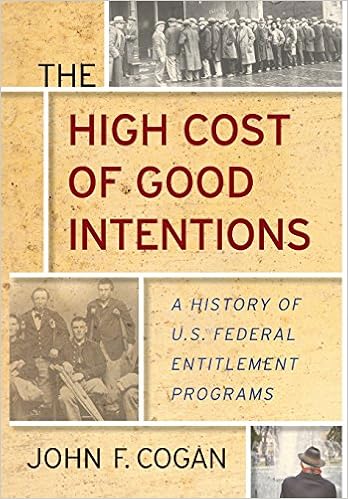
I just finished reading John Cogan's book, the High Cost if Good Intentions. This is a comprehensive work examining the history of entitlement programs, starting with pensions for Revolutionary War veterans. The work is fascinating and illuminating and has relevance to our current political and economic environment. The basic tenants of the book are rather simple. Entitlement programs throughout history start out similarly, based upon real needs to specific segments of the population. In the early periods of the Republic, all of these programs were pensions for war veterans; Revolutionary War, War of 1812, and Mexican Wars. They started out as small programs to assist veterans who were injured during their respective service obligations. In each case, the pensions were modified and expanded over time, over decades after the actual service. Furthermore, those deemed worthy of pensions morphed and expanded over time, first to veterans who were not injured during service, then to widows, then to dependents.

After the Civil War, the pool of potential recipients expanded markedly. The pool of pension eligible individuals grew over time with widows and dependent children added. While the original purpose of Civil War pensions was to compensate veterans whose function was impaired as a consequence of service-related injuries, over time criteria were changed which allowed for larger and larger numbers of veterans to qualify for benefits. The Grand Old Army was an extremely effective lobbying force after the Civil War.  Remarkably, there is still one child of a civil war veteran who is collecting pension benefits now.

Early in the republic there were attempts to forward fund pensions for navy veterans. Sailors on active duty could purchase insurance to protect them. Those who opted to participate funded a trust fund to pay for future pensions. However, the trust fund was almost immediately raided by Congress. Furthermore, the Federal government ended up providing pension benefits to sailors who did not opt into paying insurance premiums.

A similar story characterized the Social Security entitlement program. Early trust fund surpluses enticed the Congress to expand pension benefits. Payment increases were almost invariably t imes to happen during election years, often with big bumps in payments hitting October payments right before elections. Buy votes in the present and defer actual payment to later tax payers.

It does not appear to be politically possible to put scale back entitlement benefits once they are deployed and historical experience shows a consistent pattern of expansion with increased payments leveraged to optimize vote capture. The implications for our current political and fiscal environment are stark. Between Social Security, Medicare, and Medicaid, entitlements are growing faster than the economy. Entitlements make up 14% of GDP, dwarfing Defense spending (~3%) and non-defense discretionary spending (~2%).  By 2032 debt service and entitlement spending are projected to consume the entire Federal Budget.

How did this reality come to pass. At each step of the way, the parties lobbying for pensions or other payments were not totally undeserving. Limits set at the onset of any given program always leave some parties just outside the scope of the benefit. It serves as a huge incentive to push for modest expansion. However, the expansion always works as a one way valve, always expanding and always leaving some parties just on the wrong side of some line drawn in the sand.

That which cannot go on for ever won't. Barring some extraordinary change in economic growth, the Federal Government will not be able to meet it's promises. Entitlements are growing at a rate that outstrips overall growth of the economy (538). Pushing tax rates may buy some time, but equally possibly may accelerate the time line to Federal bankruptcy.

The current dysfunction in Washington regardign budgets is directly related to uncontrolled entitlement spending. It is only going to get worse as actual discretionary $'s get scarcer and scarcer; and they will.